Serverless Computing for Beginners: The Ultimate 2024 Guide
Sick of provisioning, patching, and paying for servers that just sit idle? You definitely aren’t alone. For decades, the heavy burden of infrastructure management has bogged down developers with unnecessary technical debt. Ultimately, it steals time away from the one thing that actually matters: writing great code.
Think of this as your ultimate guide to serverless computing for beginners. If you want to build highly scalable applications without the constant headache of managing operating systems, you’ve landed in the right place.
Throughout this comprehensive tutorial, we’ll break down exactly what the serverless model entails. We’ll also explore why traditional server architecture might be holding your team back, and walk through how to deploy your very first serverless function today.
What is Serverless Computing for Beginners?
At its core, serverless computing is a cloud execution model where your provider dynamically handles the allocation and provisioning of servers. All you have to do is write the code, and the cloud provider takes care of everything else. The best part? You’re only billed for the exact milliseconds your code actually runs, completely eliminating the need to pay for idle server time.
Why The Traditional Server Problem Happens
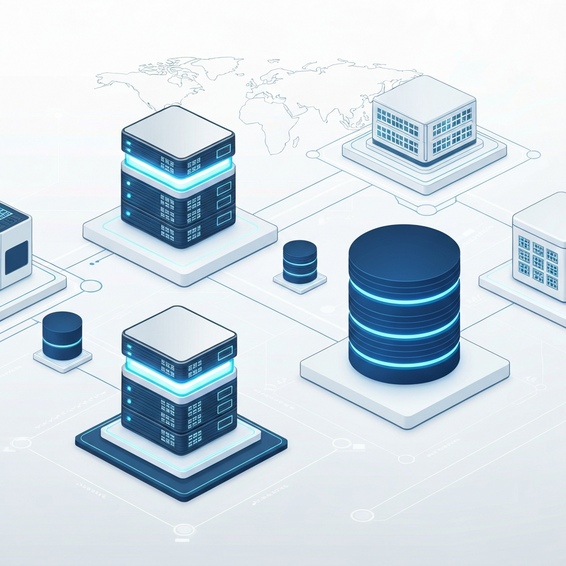
To truly appreciate the power of going serverless, we first need to look at why traditional server management causes so many headaches. In a standard deployment environment, you’re forced into a never-ending game of guessing your server capacity.
Provision too few servers, and your application will inevitably crash the moment a traffic spike hits. Provision too many, and you end up burning thousands of dollars on idle CPU and RAM. It’s a frustrating balancing act that drains both IT budgets and developer energy.
On top of that, maintaining Virtual Machines (VMs) demands continuous security patching, routine OS updates, and complex network configurations. This traditional infrastructure approach almost always creates a massive bottleneck. For teams already integrating infrastructure automation, shifting away from manual server maintenance feels like the most logical next step.
Plenty of developers try to solve these legacy scaling issues by adopting containerization tools like Docker or orchestration platforms like Kubernetes. While Kubernetes is undeniably powerful, it isn’t a silver bullet. It still requires a dedicated, highly skilled team just to manage the control plane, worker nodes, and intricate networking layers.
For an individual developer or a smaller team, the overhead of keeping a Kubernetes cluster running smoothly is simply too high. Serverless bypasses this hurdle completely. By relying on a FaaS (Function as a Service) model, you get to skip the container orchestration worries entirely.
Quick Fixes: Getting Started with Serverless
Transitioning to a serverless architecture doesn’t have to feel overwhelming. As a beginner, you can easily start small by shifting just a few single tasks into the cloud. Here are the actionable steps you need to launch your very first function.
- Choose a Cloud Provider: You’ll want to start with AWS Lambda, Google Cloud Functions, or Azure Functions. Because of its massive community ecosystem and extensive documentation, AWS Lambda is generally the best starting point.
- Write a Simple Function: Draft up a quick “Hello World” script using Python or Node.js. This tiny, self-contained snippet of code is the beating heart of FaaS.
- Set Up a Trigger: Since serverless relies heavily on an event-driven architecture, you need something to set it off. Connect your function to an API Gateway so it triggers the exact moment a user visits a specific URL.
- Deploy and Test: Finally, upload your code. Sit back and watch as the cloud provider automatically provisions the necessary resources, executing your application without a single bit of traditional server setup.
By working through these basic steps, you’ve successfully bypassed the headache of setting up an Apache or Nginx server. Grasping this simple workflow is the true foundation of modern cloud computing basics.
Advanced Solutions: Scaling Your Architecture
Once you’ve got a solid handle on the basics, it’s time to look at the bigger picture from a senior DevOps and IT perspective. Building robust, enterprise-grade applications requires moving past simple, isolated functions and embracing a fully serverless infrastructure.
Instead of relying on a traditional relational database that constantly demands persistent connections, advanced setups utilize serverless databases like Amazon DynamoDB. This strategic choice ensures your database scales perfectly right alongside your compute layer, preventing nasty bottlenecks.
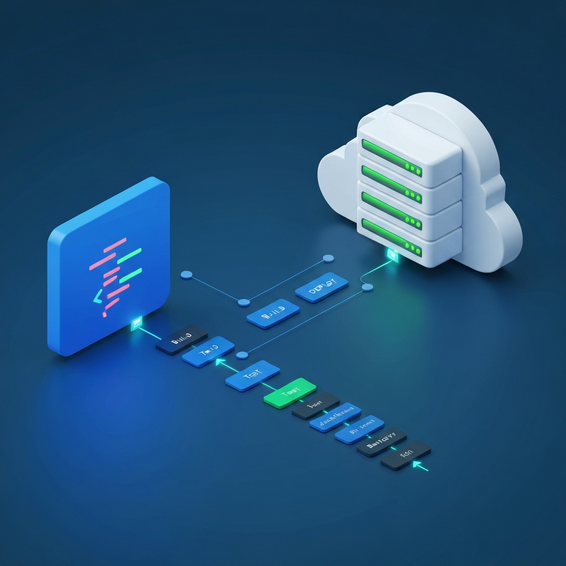
Additionally, modern development teams almost always integrate strict CI/CD pipelines. Tools like GitHub Actions can automatically deploy your serverless code the second you make a commit. If you’re serious about streamlining your DevOps workflows, automating these serverless deployments isn’t just nice to have—it’s an absolute necessity.
Another crucial piece of the advanced serverless puzzle is mastering asynchronous communication. Rather than having functions awkwardly wait on one another to finish, you decouple them entirely using message queues and pub/sub messaging services.
For example, leveraging Amazon SQS (Simple Queue Service) or SNS (Simple Notification Service) allows a function to drop a message into a queue and immediately spin down. From there, other functions can read from that queue at their own pace. This elegant setup prevents cascading failures when high traffic loads hit your system.
Best Practices for Serverless Optimization
While going serverless beautifully removes OS management from your plate, it does introduce a few new challenges. To maintain peak performance and tight security, you’ll want to follow these industry best practices.
1. Avoiding Cold Starts
A “cold start” happens when a function gets invoked after sitting completely idle. The cloud provider has to take a second or two to spin up the underlying container, which unfortunately causes latency. To mitigate this frustrating lag, keep your code bundles as small as possible, opt for faster runtimes like Go or Node.js, and utilize provisioned concurrency for your most critical endpoints.
2. Implement Least Privilege Security
You should never give your serverless functions blanket administrative access. Instead, rely on strict IAM (Identity and Access Management) roles. If a function’s only job is to write to a database, it should only possess write permissions for that exact table—nothing more.
3. Robust Monitoring
Because you simply cannot SSH into a serverless container, logging becomes your only window into the system. Rely on built-in options like AWS CloudWatch, or leverage third-party tools like Datadog to actively track memory usage, execution times, and error rates. Without a doubt, effective monitoring is crucial for maintaining robust cloud deployments.
4. Managing State Across Functions
By design, serverless functions are completely stateless. That means any local data stored in memory vanishes the moment the function finishes executing. To maintain a persistent application state, always rely on external storage systems—think Amazon S3 for file storage, or Redis for lightning-fast caching.
Recommended Tools & Resources
If you want to speed up your development process, it pays to leverage industry-standard frameworks and educational courses. Here are my top recommendations for any developer ready to dive into serverless.
- The Serverless Framework: A brilliantly powerful open-source tool that takes the headache out of deploying FaaS applications across multiple cloud providers.
- AWS SAM (Serverless Application Model): An extension of CloudFormation specifically designed to make configuring and deploying AWS Lambda applications a breeze.
- Coursera: AWS Cloud Practitioner Certification: A highly recommended starting point if you want to understand foundational cloud concepts before you even start writing code. (Affiliate Link)
- Terraform: Arguably the ultimate Infrastructure as Code (IaC) tool. It’s perfect for provisioning your API Gateways, Lambda functions, and databases in a reliably repeatable manner.
Frequently Asked Questions (FAQ)
Is serverless computing completely without servers?
Not at all! There are still physical servers humming away in centralized data centers to run your code. The term “serverless” simply means that the burden of managing, patching, and scaling those physical servers is shifted entirely onto the cloud provider.
Is serverless computing expensive?
For the vast majority of beginner and mid-tier applications, serverless actually ends up being significantly cheaper than traditional hosting. Why? Because you only pay for your actual execution time. That said, at a massive enterprise scale with constant, predictable high traffic, traditional dedicated servers can occasionally become more cost-effective.
What languages can I use for serverless functions?
The major cloud providers natively support a surprisingly wide variety of programming languages. Node.js and Python tend to be the most popular choices thanks to their incredibly fast startup times. However, Java, C#, Go, and Ruby are also widely supported. If you need something very specific, you can even bring your own custom runtimes using Docker containers.
Conclusion
Moving away from legacy infrastructure can certainly feel daunting at first, but the long-term benefits are simply undeniable. By eliminating traditional server maintenance, your development team gets to ship features faster, scale instantly to meet unexpected demand, and drastically cut down on idle computing costs.
If you take away only one thing from this guide to serverless computing for beginners, let it be this: always start small. To quickly recap your immediate next steps:
- Sign up for a cloud provider account (like AWS, Google Cloud, or Azure).
- Write a basic Node.js or Python function.
- Deploy that code using the Serverless Framework or AWS SAM.
- Keep a close eye on your function’s performance and execution logs.
Go ahead and deploy a single Lambda function, hook it up to an API Gateway, and experience the pure magic of zero-maintenance hosting for yourself. The future of cloud architecture is undoubtedly event-driven, and there’s genuinely never been a better time to get started.
About the Author