Homelab Ideas for Learning DevOps: The Ultimate 2024 Guide
If you want to break into the DevOps industry, simply reading documentation and watching tutorials won’t cut it. At the end of the day, real-world, hands-on experience is what truly separates successful engineers from everyone else.
Getting that practical experience, however, presents a bit of a dilemma. You obviously cannot practice on a company’s live production servers. At the same time, relying entirely on public cloud providers can lead to massive, unexpected billing surprises if you accidentally leave a few instances running overnight.
This is exactly where exploring homelab ideas for learning DevOps becomes an absolute game-changer for your IT career. By putting together your own local testing environment, you gain the freedom to safely break things, automate deployments, and master complex systems—all without the looming anxiety of financial risk.
In this guide, we are going to walk through some of the most effective homelab projects out there. We will cover everything from basic containerization all the way up to advanced Kubernetes clusters, giving you the exact blueprint needed to build a resume-worthy portfolio.
Why Build a HomeLab for DevOps?
In today’s software engineering landscape, theory can only take you so far. To genuinely grasp concepts like continuous integration, Infrastructure as Code (IaC), and container orchestration, you have to get your hands dirty and actually implement them.
When you rely completely on managed cloud platforms like AWS, Google Cloud, or Azure, the provider conveniently handles all the underlying infrastructure for you. While that is incredibly helpful in production, this layer of abstraction prevents you from understanding how networking, storage, and virtualization technologies operate behind the scenes.
On the flip side, setting up a bare-metal server or a cluster of mini PCs forces you to troubleshoot real, messy technical issues. You will inevitably learn how to configure DNS properly, manage Linux file permissions, set up reverse proxies, and secure your network ports.
Ultimately, a homelab gives you a safe, completely isolated sandbox. When a deployment fails or a misconfigured network switch routes traffic into a black hole, it only takes down your local network. This makes it the absolute perfect environment for deep, experiential learning.
Basic Homelab Ideas for Learning DevOps
If you are just getting started, the most important thing is to avoid overwhelming yourself. It is best to begin with these foundational projects, which will help establish the core concepts of software delivery and virtualization.
1. Set Up a Type-1 Hypervisor (Proxmox VE)
Before you can deploy any applications, you need a solid environment to host them. Installing a bare-metal hypervisor like Proxmox VE is arguably the perfect first step on your homelab journey.
Rather than running something like VirtualBox on your daily laptop, Proxmox lets you transform an old PC into a dedicated server. Once that is up and running, you can easily spin up multiple Linux Virtual Machines (VMs) alongside lightweight LXC containers.
Tackling this project teaches you the fundamentals of resource allocation, virtual networking, and snapshot backups. These are core skills that translate directly to enterprise server environments.
2. Deploy Your First Docker Containers
Containerization is essentially the heartbeat of modern DevOps. Because of this, your next homelab project should involve setting up a Linux VM and installing Docker along with Docker Compose.
- Start simple: Deploy an Nginx web server or a MySQL database using a single, straightforward Docker run command.
- Level up: Use Docker Compose to define multi-container applications, such as linking a web frontend directly to a backend database.
- Manage it: Install Portainer, an intuitive web-based GUI, so you can visually manage your running containers, networks, and storage volumes.
Understanding how containers share the host’s kernel while still maintaining strict isolation is a critical, must-have skill for any aspiring DevOps engineer.
3. Host a Local Git Repository (Gitea)
Version control is completely non-negotiable in the tech world. While GitHub and GitLab might be the industry standards, hosting your very own git server is a fantastic learning exercise.
Try deploying Gitea via Docker in your new homelab. Use it to store all of your scripts, configuration files, and application code. Not only does this give you total control over your repositories, but it also introduces you to webhooks—which will be essential for triggering automated pipelines later down the road.
Advanced DevOps Homelab Ideas
Once you feel comfortable spinning up VMs, handling basic networking, and running Docker, it is time to step up to enterprise-grade infrastructure. These advanced homelab ideas for learning DevOps will give you the kind of practical experience that makes a resume stand out.
4. Build a Kubernetes Cluster (K3s)
Kubernetes has become the undisputed industry standard for container orchestration. While setting it up from scratch is notoriously tricky, getting it running is incredibly rewarding.
You can use lightweight distributions like K3s or MicroK8s to build a multi-node cluster across a few VMs or even a stack of Raspberry Pis. Along the way, you will learn how to write deployment manifests, configure Ingress controllers (such as Traefik or NGINX), and manage persistent storage across clustered environments.
5. Implement a Complete CI/CD Pipeline
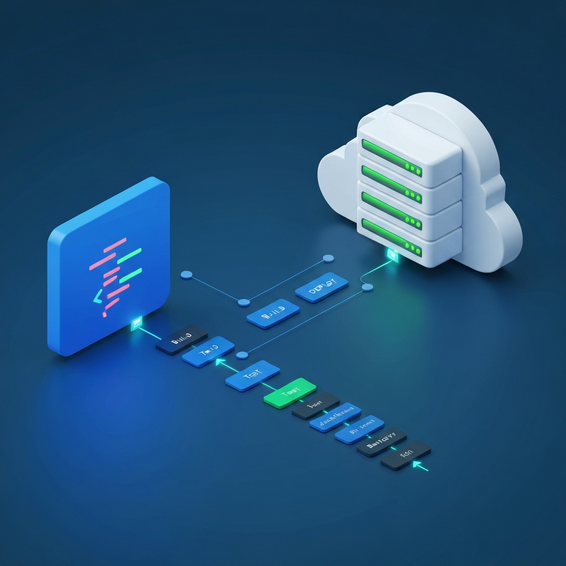
Continuous Integration and Continuous Deployment (CI/CD) pipelines exist to eliminate manual, error-prone deployment processes. Building one is the ultimate project because it ties your entire homelab together.
Install Jenkins, set up GitLab CI, or use GitHub Actions paired with your own self-hosted runners. From there, create a pipeline that automatically triggers the moment you push code to your local Gitea server. Ideally, this pipeline should build a fresh Docker image, push it to a local container registry, and instantly deploy it into your newly built Kubernetes cluster.
6. Automate with Infrastructure as Code (IaC)
Clicking through web interfaces is totally fine for beginners, but true professionals automate everything. Introduce Terraform and Ansible into your workflow to manage your homelab effectively.
- Terraform: Write declarative configuration files that automatically provision new Proxmox VMs or cloud instances without manual intervention.
- Ansible: Create playbooks to SSH into those newly created VMs, install required packages (like Docker or K3s), and configure baseline security settings.
By adopting this approach, you ensure your entire infrastructure is completely reproducible. If a server suddenly crashes, you can rebuild the exact same environment in a matter of minutes using just a single command.
7. Set Up an Observability Stack
How do you actually know if your applications are running efficiently? You cannot manage what you do not measure, which is exactly why you need robust monitoring and alerting.
A great project is deploying the “PLG” or “TIG” stack. One of the most common setups involves using Prometheus to scrape time-series metrics from your servers, Grafana to create beautiful visual dashboards, and Loki to aggregate all of your system logs into one centralized place.
Take it a step further by configuring alerts. Set them up to send a notification to a Discord or Slack channel whenever a server’s CPU usage spikes abnormally or a container unexpectedly crashes. This directly mimics the on-call monitoring systems utilized by Site Reliability Engineers (SREs).
Best Practices for Your Homelab
Building out a homelab is an exciting process, but without proper management, it can easily snowball into a messy, unmaintainable web of servers. To avoid that, stick to these essential DevOps best practices.
Treat Your Lab Like Production: Resist the urge to just hack things together. Use version control for absolutely all of your configuration files. If an application requires a password or API key, utilize a secrets management tool like HashiCorp Vault instead of leaving it hardcoded in plain text.
Implement Network Segmentation: Never expose your homelab directly to the wide-open public internet. Instead, use VLANs to separate your experimental lab traffic from your everyday home network. When you need remote access, rely on secure, encrypted tools like Tailscale, WireGuard, or Cloudflare Tunnels rather than haphazardly opening firewall ports.
Automate Your Backups: There is nothing more frustrating than losing weeks of meticulous configuration to a failed hard drive. Take advantage of tools like Proxmox Backup Server, or set up simple automated cron jobs to back up your persistent volumes to an external NAS or an inexpensive cloud storage bucket.
Recommended Tools and Resources
You certainly do not need to spend thousands of dollars to piece together an effective testing environment. Here is a quick breakdown of what you actually need to get started.
- Hardware: Refurbished corporate Mini PCs (think Intel NUCs, Lenovo ThinkCentres, or Beelink mini models) are affordable, incredibly power-efficient, and practically made for running multiple VMs. Raspberry Pis are another solid option, though their ARM architecture can occasionally complicate certain container deployments.
- Operating Systems: Proxmox VE is top-tier for virtualization, while Ubuntu Server or Debian are the perfect choices for your core Linux environments.
- Networking: Unifi or OPNSense are great for diving into advanced router configuration. For secure, zero-config VPN access, Tailscale is highly recommended.
When it comes to domain management, picking up a cheap domain name through Cloudflare lets you experiment with DNS records safely. This also makes it incredibly easy to automatically provision SSL certificates using Traefik or NGINX Proxy Manager.
Frequently Asked Questions (FAQ)
What is the cheapest way to start a DevOps homelab?
The absolute cheapest route is to just use hardware you already have lying around. You can easily install VirtualBox or VMware Workstation Player on your current desktop or laptop to spin up a couple of Linux VMs. If you want dedicated hardware, grabbing a used, refurbished corporate mini-PC off eBay for under $150 will give you a fantastic, low-power server to learn on.
Do I need enterprise server hardware to learn DevOps?
No, you absolutely do not need to buy heavy, loud, and power-hungry enterprise rackmount servers (like a Dell PowerEdge or HP ProLiant). While they can be fun to tinker with, modern DevOps is heavily focused on microservices and distributed computing. A small cluster of mini PCs, or even just a single standard desktop packed with plenty of RAM (16GB to 64GB), is more than enough.
Should I focus on Docker or Virtual Machines first?
It is highly recommended to start with Virtual Machines. Playing with VMs helps you grasp how operating systems actually interact with physical hardware and underlying networking. Once you feel comfortable with the basics of Linux server administration, you can quickly transition into Docker to tackle containerization—which truly is the cornerstone of modern DevOps deployments.
How much RAM do I need for a Kubernetes homelab?
If you opt for a lightweight distribution like K3s, you can easily run a master node and a couple of worker nodes with just 16GB of RAM. That being said, if your goal is to eventually run a full CI/CD pipeline, a robust monitoring stack, and multiple web applications all at the same time, aiming for 32GB to 64GB of RAM is definitely the sweet spot.
Conclusion
Making the leap from theoretical knowledge to practical, hands-on expertise is often the toughest hurdle for new IT professionals. By actively building out these homelab ideas for learning DevOps, you will develop the essential muscle memory required to thrive in high-pressure, technical roles.
Start small. Set up a basic hypervisor and deploy a handful of Docker containers. As your comfort level grows, push yourself to tackle Infrastructure as Code, CI/CD pipelines, and even a multi-node Kubernetes cluster. Every single mistake you make in your homelab serves as a valuable lesson that ultimately makes you a much sharper, more capable engineer in the real world.
It is time to stop just reading the documentation and start actually building. Your future self will absolutely thank you for taking the time to gain this hands-on experience!
About the Author