Docker Automation for Development Environments: The Complete Guide
We’ve all been there: setting up a new project on a completely fresh machine used to be every software developer’s worst nightmare. You’d spend days fighting dependency conflicts, hunting down specific software versions, and meticulously tweaking environment variables. And after all that effort, the process usually ended with someone muttering the infamous excuse, “Well, it works on my machine.”
Thankfully, the industry standard has experienced a dramatic shift. Implementing docker automation for development environments is no longer viewed as just a luxury—it has become a fundamental requirement for any modern software engineering team. When you standardize your local development setup, you gain the ability to onboard new developers in a matter of minutes rather than days. Above all, you ensure absolute consistency across the entire board.
In this comprehensive guide, we are going to explore exactly why local dev setups so frequently fail. From there, we’ll look at how containerization easily solves these frustrating issues, and outline the best practices for building a robust, fully automated workflow that keeps your development team both happy and productive.
Why You Need Docker Automation for Development Environments
At the very core of this issue is the dreaded concept of “dependency hell.” Whenever a developer installs runtimes—like Node.js, Python, or a PostgreSQL database—directly onto their host machine, those global packages inevitably end up clashing with other local projects. To make matters worse, version mismatches between a developer’s local machine and the live production server tend to cause subtle, silent bugs that are incredibly difficult to trace back to their source.
Furthermore, underlying operating system differences add entirely new layers of unpredictable behavior. For instance, you might run into weird networking quirks on macOS that simply don’t exist on Windows, or vice versa with file system behaviors. Without a unified dev environment setup in place, trying to fix these specific OS conflicts requires a massive amount of manual intervention.
As a result, developers frequently find themselves executing long, highly complex terminal commands just to get things running, which inherently introduces the risk of human error. This lack of a standardized approach basically turns every developer’s machine into a unique “snowflake” environment, ultimately leading to severe productivity bottlenecks and frustratingly delayed release cycles.
Moreover, the modern software lifecycle demands true agility. When a new engineer joins the team, they absolutely shouldn’t have to spend their entire first week deciphering outdated documentation just to get the application running locally. By utilizing container technology, your infrastructure effectively becomes code. This declarative approach means that the environment is inherently self-documenting, instantly reproducible, and highly resilient to any future changes.
Quick Fixes: Basic Solutions for Dev Environment Setup
If your team is just starting to dip their toes into containerization, you really don’t need to build a massive, complex enterprise configuration to see immediate benefits. Here are the most fundamental steps you can take to stabilize your local development process right now.
1. Standardize with a Clean Dockerfile
The bedrock of any successful container strategy is the dockerfile. Rather than maintaining a messy wiki document filled with twenty manual installation steps, you can encode those exact same steps into a simple, declarative file. This single source of truth guarantees that every developer on your team builds the exact same foundational image. Just remember to pin the specific versions of your base images so that you can maintain long-term stability.
2. Orchestrate with Docker Compose
Let’s face it: a modern application rarely ever runs in total isolation. You almost always need a frontend interface, a backend API, a database, and perhaps even a caching layer like Redis. Using docker compose allows you to neatly define your entire stack inside a single configuration file. With one incredibly simple docker-compose up command, anyone on your team can instantly spin up the entire ecosystem.
3. Leverage Environment Variables Safely
It is a golden rule of software engineering to never hardcode your configuration details or API secrets directly into your source code. Instead, utilize `.env` files and map them dynamically right into your running containers. This best practice allows individual developers to safely customize local ports or toggle feature flags without the risk of accidentally committing highly sensitive keys to your version control repository.
Advanced Solutions: Next-Level Containerization
Once you have your basic orchestration running smoothly, it is time to look at a few advanced developer and IT setups that will truly automate your day-to-day workflow.
1. Implement VS Code DevContainers
DevContainers take the concept of automation a step further by actually containerizing the IDE itself. By simply dropping a devcontainer.json file into your code repository, VS Code will automatically build the container behind the scenes and attach the editor directly to it. This means that your preferred extensions, strict linters, and code formatting rules are instantly standardized across the entire team. It completely removes the friction of setting up a local environment.
2. Automate Workflows with Makefiles
While standard Docker commands are undeniably powerful, typing out complex, multi-flag execution strings all day gets tedious quickly. By wrapping these long commands inside a Makefile, developers can run simple, memorable shortcuts like make migrate or make test. This beautifully abstracts away the underlying complexity of the runtime environment, saving everyone a few precious keystrokes.
3. Local CI/CD Pipeline Simulation
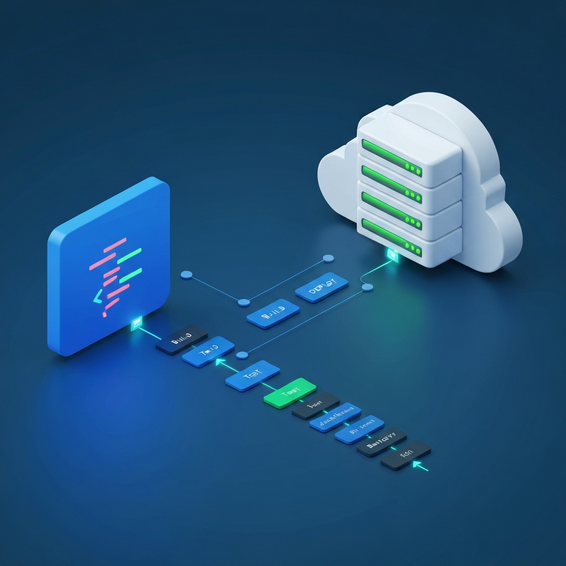
Waiting for remote cloud servers to run your CI/CD pipeline just to discover a failed build ten minutes later is incredibly frustrating. Fortunately, tools like act allow you to run your GitHub Actions locally, right inside isolated containers. This brilliantly bridges the gap between your local coding environment and your remote continuous integration system, speeding up your feedback loops significantly.
4. Integrate a Local Container Registry
When you are working with large, distributed teams, pulling massive Docker images from remote servers multiple times a day wastes a lot of valuable bandwidth and time. Setting up a proxy for a local container registry can seamlessly cache these heavy images right on your local network. This advanced step ensures that your local deployment speeds remain consistently lightning-fast, even if your remote network connectivity happens to be compromised.
Best Practices for Local Development
To keep your freshly automated setup performing well and remaining secure, it is absolutely vital to adhere to a few core industry best practices.
- Use Multi-Stage Builds: Instead of bloating your final container, compile your code in one stage and copy only the necessary compiled binaries into the final image. This significantly minimizes the overall footprint of your images before you push them to a container registry.
- Optimize Volume Mounts: On operating systems like macOS and Windows, heavy disk I/O between the host machine and the container can severely slow down your application’s performance. Make sure to utilize named volumes for your databases and configure cached mounts for your actual source code.
- Run as Non-Root: From a security standpoint, you should always avoid running your applications as the root user inside the container. Define a specific, restricted user to accurately mimic the permissions of your eventual production environment.
- Implement Health Checks: You can easily prevent annoying race conditions by adding simple health checks to your orchestration files. This guarantees that your backend API will patiently wait until the database is fully initialized before it attempts to connect.
- Automate Cleanups: Create a few handy scripts to regularly prune dangling images and sweep away stopped containers. This proactive habit will prevent your developers’ local machines from rapidly running out of disk space.
Recommended Tools and Resources
To really supercharge your daily workflow, you should consider adding a few of these standout tools to your tech stack. Note: Some of these recommendations may include affiliate links that help support our technical content.
- OrbStack: A remarkably lightweight, lightning-fast drop-in replacement for Docker Desktop on macOS. It significantly reduces battery consumption and minimizes heavy CPU usage.
- Lazydocker: A brilliantly designed terminal UI that helps you effortlessly manage running services, view live application logs, and monitor resource usage—all without needing to memorize a dozen complex CLI flags.
- Testcontainers: An absolutely excellent library dedicated to automated integration testing. It dynamically spins up disposable, short-lived databases specifically for the duration of your test suite execution.
Frequently Asked Questions (FAQ)
What is the primary benefit of containerizing my local environment?
Without a doubt, the primary benefit is absolute consistency. Containerization ensures that the exact same operating system layout, dependencies, and granular configurations are used by every single developer. This completely eliminates the frustrating “works on my machine” phenomenon.
Is Docker Compose enough for local development?
For the vast majority of small to medium-sized engineering teams, standard orchestration with Docker Compose is perfectly adequate. However, as your projects grow in scope and complexity, integrating robust tools like DevContainers or automated task runners can significantly reduce your team’s daily cognitive load.
Does running containers slow down my IDE?
It certainly can, especially if your volume mounts are not properly configured across different operating systems. Thankfully, using highly optimized backends—such as WSL2 on Windows machines or OrbStack on macOS—largely mitigates these performance hits, ensuring you maintain a smooth, native-feeling coding experience.
Conclusion
Making the transition from clunky manual setups to fully automated workflows is a massive, undeniable game-changer for overall engineering productivity. By addressing your dependency conflicts head-on and utilizing these powerful orchestration tools, you can drastically reduce the countless hours previously spent debugging obscure environment issues.
Ultimately, taking the time to master docker automation for development environments empowers your entire team to focus heavily on what truly matters: writing excellent code and shipping features rapidly. Start small with the basic configurations, rigorously adopt best practices to ensure peak performance, and gradually introduce advanced tools like DevContainers to achieve truly unparalleled developer velocity.
About the Author