The Ultimate Home Server Setup Guide for Developers
Having flexibility and control over your deployment environment is practically a requirement for modern developers. But let’s be honest—paying steep monthly cloud hosting fees just to test a side project gets old fast. Setting up a local development environment is a fantastic way to save cash while giving you absolute control over your infrastructure. If you’ve been searching for the ultimate home server setup guide for developers, you’re exactly where you need to be.
Running a dedicated server right at home completely transforms your workflow. It creates a safe, low-stress sandbox that perfectly bridges the gap between coding locally on your machine and deploying to a live production environment. In this comprehensive guide, we’ll walk you through the entire process, covering everything from picking out the right hardware to tackling advanced virtualization and networking.
Why You Need a Home Server Setup Guide for Developers
While it’s true that modern software development revolves around cloud computing, relying solely on external servers can lead to some incredibly frustrating bottlenecks. An unexpected internet outage or a sudden spike in your cloud billing can easily bring your productivity to a grinding halt. By building a local DIY home lab, you solve these issues outright by bringing your entire infrastructure in-house.
Beyond the cloud costs, trying to run a complex tech stack directly on your primary workstation is often a logistical nightmare. When you’re spinning up heavy Docker containers, testing microservices, or running several database instances at once, you’re eating up massive amounts of system resources. For laptop users, this usually means dealing with aggressive thermal throttling and a battery that drains in minutes.
Offloading those resource-heavy background tasks to a dedicated machine instantly frees up your main computer. More importantly, it allows you to simulate a realistic production environment where you can safely test network latency and validate tricky database migrations without ever putting live data at risk. Plus, the hands-on experience you’ll gain naturally makes you a much sharper DevOps engineer along the way.
Basic Solutions for Your First Home Server
If you’re just dipping your toes into the world of self-hosted tools and server management, starting small is definitely the way to go. You absolutely don’t need to drop thousands on enterprise-grade hardware just to get a functional development space up and running. To help you hit the ground running, here are the core steps for building your very first server setup.
- Repurpose Existing Hardware: Before you even think about buying new gear, take a look in your closet for an old desktop or laptop. Believe it or not, a five-year-old quad-core Intel processor paired with 16GB of RAM is actually more than enough to run a solid Linux server environment.
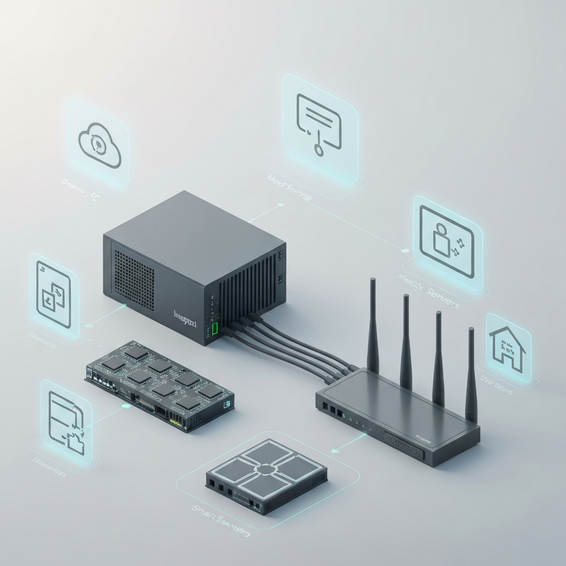
- Pick the Right Form Factor: If you don’t have spare parts and need to buy hardware, look into used corporate mini-PCs like a Lenovo ThinkCentre or Dell Optiplex. They are incredibly cheap to pick up, whisper-quiet, and highly power-efficient.
- Install a Reliable Operating System: For beginners, Ubuntu Server or Debian are fantastic choices because of their massive, welcoming communities. On the other hand, if you regularly work in enterprise environments, you might want to consider Rocky Linux or AlmaLinux for that native RHEL compatibility.
- Set Up Headless Access: Hardwire your machine to your router using an Ethernet cable and configure SSH. Running a “headless” setup simply means you won’t need a dedicated monitor—you can manage the entire server remotely right from your everyday laptop.
- Deploy Docker: Containerization is essentially the backbone of modern, isolated testing. By installing Docker and Docker Compose, you’ll be able to spin up web servers, caching layers, and databases in seconds with just a few lines of code.
Advanced Solutions: Taking Your Architecture Further
Eventually, you’ll likely outgrow a basic, bare-metal Linux installation—and when that happens, it’s time to level up your architecture. Advanced developers frequently require complex networking, fully isolated testing environments, and multiple virtual machines to get their work done. This is precisely where a full-fledged HomeLab truly starts to shine.
Rather than sticking with a standard operating system, you might want to look into installing a Type-1 Hypervisor. Platforms like VMware ESXi or Proxmox VE let you take your physical hardware and slice it into several independent virtual machines. Because of this, you can seamlessly run a dedicated firewall, a Linux testing rig, and an isolated Windows Server all at the exact same time.
As your personal infrastructure expands, diving into Infrastructure as Code (IaC) becomes incredibly valuable. Instead of configuring every new server by hand, you can leverage tools like Terraform and Ansible to automatically provision your local environment. This approach not only mimics professional enterprise deployments, but it also guarantees that your home server is completely reproducible and version-controlled.
When it comes to persistent storage, building a Network Attached Storage (NAS) system with TrueNAS is a brilliant way to establish reliable data redundancy. You can easily mount these storage arrays straight into your development containers or Kubernetes clusters. Doing so guarantees that your crucial database backups, source code, and personal media files stay completely safe, even if a drive unexpectedly fails.
Best Practices for Server Optimization and Security
Taking charge of your own infrastructure naturally introduces a few new responsibilities, particularly when it comes to system performance and security. Simply exposing your home server to the open internet without any safeguards is a huge risk you don’t want to take. To keep your data locked down and your environment running smoothly, make sure to follow these essential best practices.
- Use Cryptographic SSH Keys: Do yourself a favor and disable password authentication across all your virtual machines right away. Relying strictly on SSH keys to access your server is one of the easiest ways to prevent automated brute-force attacks.
- Implement a Reverse Proxy: Take advantage of modern routing tools like Traefik, Caddy, or Nginx Proxy Manager. They will seamlessly handle your SSL certificates and securely route incoming traffic directly to your self-hosted applications.
- Set Up a Secure VPN: Rather than opening up a bunch of vulnerable ports on your home router, install Tailscale or WireGuard. This creates an encrypted tunnel, letting you safely access your local development environment whether you’re at the office or sitting in a coffee shop.
- Deploy System Monitoring: Set up Grafana and Prometheus to keep a close eye on your disk space, memory consumption, and CPU usage. Having a visual dashboard makes it incredibly easy to spot resource bottlenecks long before they have the chance to crash your server.
- Automate Your Backups: Mistakes happen, and hardware will eventually fail. Protect yourself by using automated scripts and cron jobs to regularly send configuration files and critical database dumps to a secondary physical drive or a cheap cloud storage bucket.
Recommended Tools and Hardware Resources
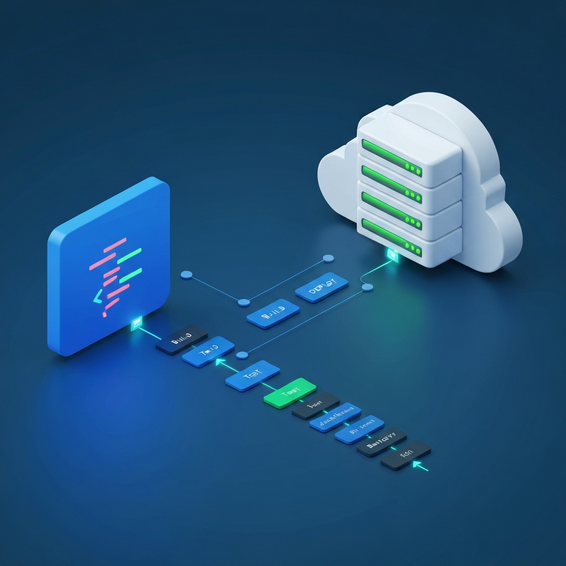
Maximizing your productivity requires a mix of reliable hardware and the right software stack. If you want to build a truly efficient CI/CD pipeline at home, you’ll need to use industry-standard tooling. With that in mind, here are a few highly recommended resources you should absolutely consider for your build.
- Intel NUC Mini PCs: These are widely considered the gold standard when it comes to compact, energy-efficient home servers, offering surprisingly strong multi-core performance in a very tiny footprint.
- Uninterruptible Power Supply (UPS): Don’t skip protecting your hardware from sudden outages and power surges. A good UPS will ensure your databases don’t face catastrophic corruption during a blackout.
- Portainer & Rancher: Both of these provide fantastic, user-friendly graphical web interfaces for managing your lightweight Kubernetes (K3s) clusters and Docker containers.
- GitLab or Gitea: Hosting your own Git repositories locally is a great way to keep proprietary code completely private while still enjoying powerful, built-in issue tracking features.
- GitHub Actions Runner: By automating your continuous deployment and testing workflows directly on your own hardware, you’ll save a massive amount of cloud pipeline minutes.
Frequently Asked Questions (FAQ)
What is the best OS for a developer home server?
For the vast majority of developers, Ubuntu Server serves as the perfect starting point thanks to its rock-solid stability and endless community documentation. However, if your goal is to utilize virtualization so you can run multiple isolated systems, Proxmox VE remains the undisputed heavy-hitter for home labs.
Do I need expensive server-grade hardware?
Not at all. Standard consumer-grade hardware is more than capable of powering a local development environment. A normal desktop CPU, combined with a pair of reliable NVMe SSDs and at least 32GB of RAM, will easily chew through almost any modern development workload you throw at it.
How much does it cost to build a home server?
If you repurpose old hardware lying around your house, you can actually start for free. But if you’d prefer to build a dedicated, highly power-efficient mini-PC setup using refurbished enterprise gear, you can generally expect to spend somewhere in the neighborhood of $150 to $400.
Is it safe to expose my local server to the internet?
It certainly can be, provided you strictly adhere to modern security protocols. You should always use a reverse proxy, enforce robust SSL encryption, and implement tools like Fail2Ban. Whenever possible, opt for a zero-trust network like Tailscale rather than relying on traditional port forwarding.
Conclusion
Setting up your own local infrastructure easily ranks as one of the most educational and rewarding projects a developer can tackle. We truly hope this home server setup guide for developers has given you a clear, actionable roadmap to kickstart your journey. By shifting those heavy workloads to a local machine, you’ll unlock significantly better performance, slash your operational costs, and maintain total data privacy.
Just remember that it’s okay to start small. Try repurposing older hardware and getting comfortable with basic Docker deployments before diving headfirst into complex hypervisors. As your networking skills naturally improve, your server setup will organically evolve right alongside them into a robust, enterprise-grade environment. While you’re here, be sure to check out our other tutorials on infrastructure automation to find even more ways to level up your self-hosted architecture.
About the Author