How to Manage Development Workflows Efficiently in 2025
Are your software releases constantly getting bogged down by merge conflicts, manual testing bottlenecks, or deployment failures? As engineering teams grow, keeping the software delivery lifecycle running smoothly can easily become a massive source of friction. Understanding exactly how to manage development workflows efficiently is often what separates the teams shipping reliable code every single day from those spending weeks chasing down environment-specific bugs.
Let’s face it: developers frequently spend more time wrestling with local environment configurations or trying to untangle messy branch histories than they do actually writing code. This frustrating reality doesn’t just kill developer productivity; it takes a tangible toll on the business’s bottom line. Clunky workflows are a fast track to burnout, missed project deadlines, and unstable production releases.
In this comprehensive technical guide, we’ll break down the underlying causes of workflow friction. From actionable quick fixes you can implement today to advanced DevOps automation strategies, we’ll cover everything you need to optimize your team’s software delivery pipeline.
How to Manage Development Workflows Efficiently: Why Bottlenecks Happen
When development workflows feel disorganized, a lack of engineering talent is rarely the culprit. More often than not, the chaos stems from mounting technical debt, misaligned team processes, and a glaring lack of standardization across environments. Recognizing these technical root causes is your first crucial step toward smoothing things out.
- The “It Works on My Machine” Syndrome: We’ve all heard this excuse. When local development setups aren’t properly synced with staging and production servers, code that runs flawlessly on a laptop is bound to fail during deployment. These headaches usually trace back to differing operating systems, mismatched dependency versions, or completely inconsistent database states.
- Manual and Tedious Processes: Relying on manual testing routines, human-driven code reviews, and hand-executed deployment scripts dramatically increases your exposure to human error. Beyond that, it puts a hard speed limit on how fast your team can confidently push new application updates to your users.
- Poor Version Control Hygiene: Without a clear, universally enforced branching and merging strategy, developers are inevitably going to step on each other’s toes. Letting feature branches live for weeks at a time creates a “merge hell” scenario, where fixing code conflicts actually takes longer than building the feature in the first place.
Quick Fixes and Basic Solutions
If you are exploring how to manage development workflows efficiently but aren’t quite ready to overhaul your entire IT infrastructure, you should start right here. Focusing on these foundational steps can make a massive difference, as small improvements in daily coding habits tend to compound beautifully over time.
1. Implement a Standardized Branching Strategy
Start by adopting a predictable Git workflow, such as GitHub Flow or GitLab Flow. Make it a team rule to avoid keeping feature branches open for too long. Instead, encourage your developers to push small, incremental changes on a frequent basis. This simple shift drastically reduces the likelihood of messy merge conflicts and makes peer code reviews much easier to handle.
2. Unify Development Environments
Put an end to local configuration drift by bringing in tools like `.editorconfig`, Prettier, and ESLint to automatically enforce your team’s code formatting rules. Furthermore, you need to ensure that every developer is running the exact same Node, Python, or PHP versions. Standardized version managers like NVM or Pyenv make this synchronization incredibly straightforward.
3. Link Commits to Issue Tracking
Make it a strict requirement that every Git commit or Pull Request (PR) references a specific ticket in your project management tool, whether that’s Jira, Linear, or Trello. This creates a beautifully transparent audit trail. If someone on the team needs to understand the exact reasoning behind a code change months or even years later, the context is right there waiting for them.
Advanced Solutions for Developer Productivity
While the basic fixes are great for smaller setups, engineering teams looking to scale need to take things further. To truly evolve, those manual processes have to be replaced entirely by resilient software architecture and comprehensive infrastructure automation.
1. Implement CI/CD Pipelines
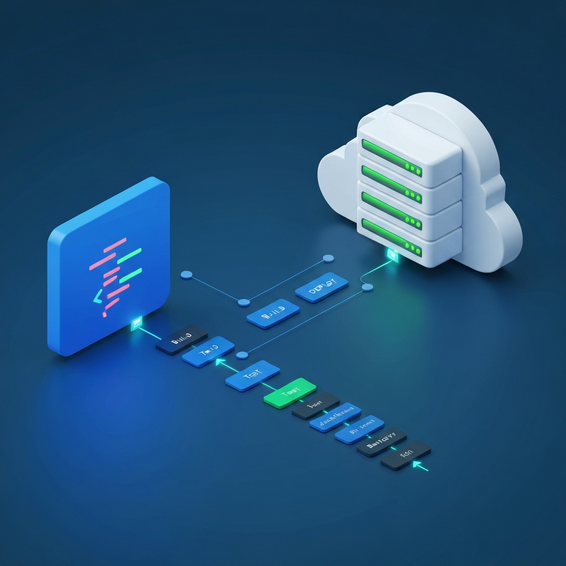
A Continuous Integration and Continuous Deployment (CI/CD) pipeline serves as the true backbone of modern software engineering. The moment a developer pushes code, your CI server should automatically kick off a build, run the unit tests, and execute static code analysis. If all checks pass with flying colors, the CD pipeline then automatically pushes that code to staging or production. This automated gatekeeping guarantees that fundamentally broken code never reaches your end users.
2. Containerize Your Applications
Leveraging Docker to containerize your applications is the ultimate cure for environment disparity. A Docker container neatly packages your core application code right alongside its necessary libraries, dependencies, and configuration files. Because of this, the exact same binary image running on a developer’s local machine is exactly what spins up in the cloud.
3. Utilize Infrastructure as Code (IaC)
It’s time to stop manually clicking through cloud provider dashboards every time you need to provision a server. By using Infrastructure as Code tools like Terraform or Ansible, you can define your entire cloud environment within text files. IaC ensures your deployment infrastructure remains perfectly reproducible, safely version-controlled, and ready to scale at a moment’s notice.
4. Automate Database Migrations
Handling database schema changes is widely considered one of the trickiest aspects of software delivery. Trying to manually update databases is a common recipe for production outages. To avoid this, bring in migration tools like Flyway, Liquibase, or ORM-specific CLIs to version-control your schema changes. When you run these migrations automatically during your deployment phase, you ensure that your application logic and underlying database structure stay perfectly in sync.
Best Practices for Process Optimization
Keeping your workflow running like a well-oiled machine demands continuous discipline. Make sure to embed these vital optimization and security best practices into your daily operations to secure long-term stability.
- Shift-Left Security: Don’t wait until the end of the line to check for vulnerabilities. Integrate security scanning directly into your CI/CD automation pipelines. Using tools like Snyk or Dependabot allows you to automatically scan repositories for risky dependencies long before the code is ever merged.
- Automated Code Reviews: Human peer reviews will always be irreplaceable when it comes to high-level architectural decisions. However, you should absolutely automate the tedious task of hunting for syntax errors, code smells, and formatting mistakes by utilizing static analysis tools like SonarQube.
- Monitor DORA Metrics: You simply can’t improve what you don’t measure. Make it a habit to track the four core DORA metrics: Deployment Frequency, Lead Time for Changes, Mean Time to Recovery (MTTR), and Change Failure Rate. These objective data points will clearly highlight exactly where your workflow bottlenecks are hiding.
Recommended Tools and Resources
You can’t build a fully automated pipeline without the right technology stack. If you’re looking to upgrade, here are a few industry-leading tools you should strongly consider integrating into your team’s daily workflow.
- GitHub Actions: A remarkably powerful, native CI/CD platform that lets you automate your software workflows directly inside your existing GitHub repositories.
- Docker: The absolute industry standard when it comes to containerizing applications. It guarantees consistent environments from a local laptop all the way up to cloud production servers.
- DigitalOcean: An incredibly intuitive and developer-friendly cloud hosting platform. It is a fantastic choice for deploying containerized apps and managing scalable Kubernetes clusters with minimal headache.
- Terraform: The premier Infrastructure as Code tool, giving developers the ability to safely, predictably, and consistently provision and tweak cloud infrastructure.
Frequently Asked Questions (FAQ)
What is the most efficient development workflow?
The most effective workflows are built around a standardized, highly automated pipeline driven by a Git-based version control system. By leveraging continuous integration (CI) for automated testing alongside continuous deployment (CD) for seamless delivery, teams can strictly minimize manual intervention while ensuring all development and production environments remain identical.
How do you optimize software development processes?
Optimizing your software development process requires systematically eliminating manual tasks through automation and enforcing a disciplined branching strategy. By utilizing containerization tools like Docker, maintaining consistent code reviews, applying shift-left security principles, and tracking developer productivity via objective DORA metrics, you can easily prevent downstream delivery delays.
Why is workflow automation important in DevOps?
Workflow automation is a cornerstone of DevOps because it drastically reduces the chance of human error while simultaneously accelerating the software release cycle. When engineers aren’t bogged down debugging deployment scripts, they can focus their energy on writing actual feature code. Ultimately, automation ensures greater system reliability and a significantly faster time-to-market.
Conclusion
Successfully scaling a software engineering team is about so much more than just hiring top-tier talent; it requires building a robust, friction-free environment where those developers can actually thrive. By taking the time to standardize your version control, adopt modern containerization, and fully automate your deployment pipelines, you can effectively wipe out the operational bottlenecks that drag teams down.
Ultimately, mastering how to manage development workflows efficiently is an ongoing journey of continuous IT improvement. Start today by implementing the basic, foundational fixes, and slowly weave in advanced CI/CD and DevOps automation as your team’s demands grow. The final payoff will be faster application releases, significantly fewer bugs, and a much happier, more productive engineering team.
About the Author