10 Best Homelab Projects for Beginners: Start Self-Hosting
Watching your monthly subscription fees pile up for cloud storage, media streaming, and web hosting gets old quickly. Choosing to build a personal server offers a deeply rewarding way to reclaim your digital autonomy. If you are searching for the best homelab projects for beginners, you have landed in the perfect spot.
Setting up a personal homelab gives you a completely sandbox-style environment where you can learn new IT skills, host essential services, and supercharge your home network. Whether your goal is to block ads across your entire Wi-Fi, build a custom media library, or simply dip your toes into Docker containers, the secret to success is starting small.
Rather than getting overwhelmed, let’s explore a curated selection of beginner-friendly self-hosting projects. We will also cover the exact hardware you need to get things running, along with the industry best practices necessary to keep your personal data locked down safely.
Why You Need the Best Homelab Projects for Beginners
It is perfectly normal to wonder if setting up a personal server is actually worth your weekend. In today’s tech landscape, relying heavily on massive corporations usually means giving up some privacy and bracing for inevitable subscription price hikes. A homelab directly solves this issue by quite literally bringing your data back under your own roof.
Looking at it from a technical angle, a homelab setup acts as a digital playground for both IT professionals and weekend tinkerers. It creates the perfect space to gain practical, hands-on experience with advanced networking, virtualization technologies, and foundational Linux administration.
Interestingly, these happen to be incredibly sought-after skills within DevOps, modern cloud computing, and software development. By tackling simple self-hosted tools first, you naturally begin to build the kind of technical expertise required to manage much more complex IT infrastructure down the road.
Quick Fixes: 5 Foundational Beginner Homelab Projects
If you are ready to get your hands dirty, we have lined up the perfect foundational projects. These applications demand minimal hardware, deliver massive quality-of-life benefits immediately, and remain remarkably simple to deploy.
- Pi-hole (Network-Wide Ad Blocker)
Functioning as a DNS sinkhole, Pi-hole shields your entire home network from aggressive advertisements and invisible web trackers. When you install it on a low-resource Linux virtual machine or a simple Raspberry Pi, every single device connected to your Wi-Fi—from smartphones to smart TVs—will instantly load webpages much faster and noticeably cleaner. - Nextcloud (Personal Cloud Storage)
Imagine permanently ditching Google Drive, OneDrive, and Dropbox. Nextcloud offers a robust, open-source productivity platform that empowers you to store files, seamlessly sync your daily calendars, and manage personal contacts securely right on your own hardware. - Jellyfin or Plex (Self-Hosted Media Server)
Reclaim your digital entertainment by organizing your personal movies, TV shows, and music libraries exactly how you like them. While Plex is widely known, Jellyfin is a fantastic, completely free, and open-source alternative that streams your high-definition media to any device without imposing frustrating subscription limits. - Home Assistant (Smart Home Hub)
Achieve true, entirely local control over your sprawling smart home ecosystem. Home Assistant flawlessly integrates with thousands of IoT devices across varying brands, enabling you to build highly complex automation routines without ever relying on sluggish or vulnerable cloud connections. - Uptime Kuma (Service Monitoring)
As soon as you have a few essential services ticking away, you will want to know the moment they happen to go offline. Uptime Kuma provides a gorgeously designed, intuitive monitoring dashboard that constantly pings your servers, automatically pushing an alert directly to your phone if something happens to crash.
Advanced Solutions: Leveling Up Your IT Skills
After you master those initial basics, it naturally makes sense to optimize your new workflow. The following advanced solutions represent actual standards used throughout the enterprise IT world, which makes them absolutely perfect for leveling up your real-world system administration capabilities.
- Proxmox VE (Virtualization): Rather than limiting your hardware to a single operating system, give Proxmox a try. This bare-metal hypervisor allows you to spin up multiple isolated virtual machines (VMs) alongside incredibly lightweight LXC containers, running all of them simultaneously on one physical rig.
- Docker and Portainer: Containerization has rapidly become the modern standard for deploying applications. Docker neatly isolates your self-hosted tools to prevent messy software conflicts, while Portainer layers on a sleek web interface so you can easily manage those containers, tweak custom networks, and handle persistent storage volumes.
- Nginx Proxy Manager: Safely exposing your private web services to the broader internet essentially requires a reverse proxy. Nginx Proxy Manager steps in to handle your domain routing, going so far as to automatically provision free SSL certificates through Let’s Encrypt to guarantee your traffic stays encrypted.
- Self-Hosted Databases: Choosing to run your own dedicated instances of MySQL or PostgreSQL is an excellent way to learn. It teaches you the vital, hands-on database management skills that are practically mandatory for any modern web developer today.
Homelab Best Practices for Performance and Security
Because running a personal server essentially turns you into your own systems administrator, taking shortcuts is rarely a good idea. Adhering to these essential best practices will ensure that your self-hosted environment remains incredibly secure, highly resilient, and consistently performant.
- Implement the 3-2-1 Backup Strategy: At some point, hardware is going to fail. Always maintain three distinct copies of your data, spread across two different media types, with at least one copy tucked away safely offsite. You can even use tools like Proxmox Backup Server or Restic to completely automate this vital process.
- Never Expose Ports Unnecessarily: Try to avoid opening ports on your home router to the public internet unless you absolutely have to. A much safer alternative is leveraging a secure mesh VPN whenever you need remote access to your internal network.
- Automate Software Updates: Make it a habit to keep your self-hosted applications and your underlying Linux distributions properly updated. Leaving software unpatched stands as the number one reason why personal servers suffer security breaches.
- Document Everything: Write down detailed, organized notes regarding your static IP addresses, overall network topology, and specific deployment commands. Firing up a tool like BookStack is a fantastic way to build out your own personal IT wiki.
- Monitor Power Consumption: While old enterprise rack-mount servers look cool, they consume staggering amounts of electricity and pump out serious heat. Sticking with modern, power-efficient hardware will save you from painful surprises on your monthly electric bill.
Recommended Tools and Hardware Resources
You truly do not need a loud, space-consuming enterprise server rack just to start self-hosting. To help you confidently launch your journey, here is some of the best beginner-friendly gear available.
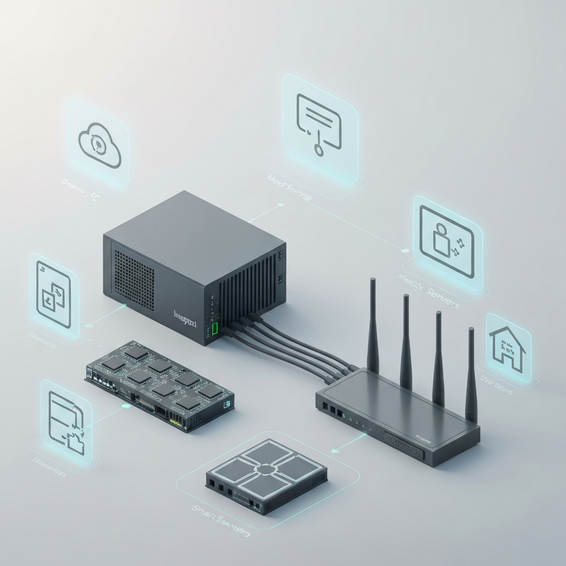
- Mini PCs (Intel NUC / Beelink): Compact machines like Beelink Mini PCs deliver incredible power efficiency, whisper-quiet operation, and surprisingly robust multi-core performance. They serve as the ultimate starter nodes for running Proxmox and Docker.
- Raspberry Pi 4 or 5: These tiny boards are absolutely perfect for single-purpose, low-impact applications like Pi-hole or Home Assistant. Not only are they fairly inexpensive, but they run completely silent and sip virtually zero electricity.
- Network-Attached Storage (NAS): When strict data redundancy and sheer storage volume rank at the top of your list, you should strongly consider a pre-built Synology NAS enclosure. The ecosystem is remarkably user-friendly and even supports firing up Docker containers right out of the box.
- Tailscale: This is a genuinely brilliant zero-config VPN built on top of WireGuard. It empowers you to securely connect back to your server dashboards from anywhere in the world, completely eliminating the need to expose router ports.
Frequently Asked Questions (FAQ)
What exactly is a homelab?
At its core, a homelab is simply a personal server or a dedicated home networking setup designed for learning, testing, and self-hosting digital applications. You can think of it as your own private, educational playground—a place meant for IT experimentation and keeping useful services, like media servers and network-wide ad blockers, up and running.
How much does a basic setup cost?
Believe it or not, you can get started entirely for free just by repurposing an old laptop or a dusty desktop PC you already have lying around. However, if you would rather purchase dedicated, power-efficient hardware, buying a refurbished corporate micro-PC or a brand-new Raspberry Pi typically ranges anywhere from $50 to $150.
Do I need to know Linux to build a personal server?
Having some foundational Linux knowledge definitely smooths the learning curve, but it is by no means a strict requirement to get going today. Many of the best beginner projects rely on simple installation scripts or highly intuitive web interfaces. In fact, building a personal server is arguably the most effective way to learn Linux naturally as you go.
Are home servers safe from hackers?
Your self-hosted applications remain incredibly safe, provided you stick to basic security hygiene. The golden rule is to avoid forwarding public ports on your router unless you have already implemented strict authentication measures alongside a reverse proxy. Whenever possible, rely heavily on secure mesh VPNs, such as Tailscale, for gaining external access to your network.
Conclusion
Taking the leap into self-hosting really doesn’t need to be an overwhelming endeavor. By initially focusing your energy on the best homelab projects for beginners, you can steadily construct a powerful, secure, and highly functional personal network that directly caters to your specific daily needs.
The smartest approach is to start small. Try running something remarkably simple, like setting up Pi-hole on an aging laptop. Once you find your footing, you can confidently expand out into more impressive setups—think media servers like Jellyfin, streamlined container management via Docker, or automated routines for your smart home. The deep, hands-on experience you gather along the way will prove absolutely invaluable for enhancing your personal data privacy and potentially advancing your IT career.
Are you ready to finally take ownership of your digital footprint? Dust off an old PC, install a fresh copy of Ubuntu Server or Proxmox, and have fun deploying your very first Docker container today!
About the Author