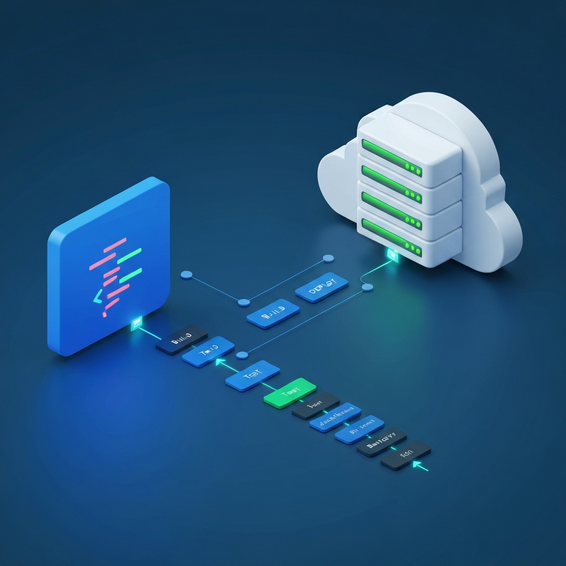
10 Best Self Hosted Tools Every Developer Should Try in 2024
Sick of watching your project budget get swallowed whole by creeping SaaS subscription fees? It’s no secret that modern software development leans heavily on third-party cloud platforms. Sure, these services bring undeniable convenience to the table. However, they also introduce massive headaches like vendor lock-in, questionable data privacy, and pricing models that seem to change with the wind.
Taking back control of your infrastructure is the ultimate way to reclaim both your flexibility and privacy. Whether you’re firing up a humble home server or deploying straight to a cloud VPS, diving into the top self hosted tools every developer should try will give your daily productivity a serious boost. The best part? You gain access to the exact same heavy-hitting features found in enterprise SaaS, just without the staggering enterprise price tag.
Throughout this guide, we will break down the must-have open-source software and self-hosted applications capable of completely transforming your DevOps workflow. Just looking for a quick answer? Here is a rapid-fire list of the top self hosted tools every developer should try: Uptime Kuma, Gitea, Appwrite, Portainer, and n8n.
Why Developers Need to Try Self Hosted Tools Every Developer Should Try
To understand how we ended up with such an overwhelming reliance on SaaS, we need to take a step back and look at the evolution of modern development ecosystems. Early on, the sheer convenience of managed services almost always outweighs any initial technical concerns. Before you know it, developers find themselves firmly trapped inside walled, proprietary ecosystems.
It usually happens gradually. As your projects begin to scale and your user base naturally grows, you inevitably slam into strict API rate limits. Seemingly overnight, that generous “free tier” cloud database or continuous deployment pipeline morphs into a crippling monthly expense. This frustrating bottleneck is the exact reason why migrating to your own hardware—or even a highly affordable VPS—is surging in popularity across the industry.
Beyond the financial cost, data privacy remains a critical concern for modern teams. Whenever you build your product on top of managed third-party platforms, you are effectively handing over highly sensitive user data to external vendors. By pivoting to and leveraging your own HomeLab infrastructure, you immediately secure absolute data sovereignty. You get the final say over your databases, your code repositories, and your internal analytics.
Quick Fixes / Basic Solutions: Start Here
If you are brand new to the world of self-hosting, resist the urge to jump straight into configuring complex Kubernetes clusters right away. Instead, start small with a handful of quick fixes and basic solutions. These beginner-friendly options deliver massive immediate value, are incredibly easy to deploy using Docker, and will seamlessly upgrade your daily routine.
- Portainer: While wrangling Docker containers through the command line is a great skill to have, visualizing them in real-time is undeniably better. Portainer provides a surprisingly lightweight yet incredibly powerful web GUI, allowing you to manage containers, pull images, and configure network layers with zero friction.
- Uptime Kuma: It’s time to stop paying monthly fees just for basic site monitoring. Uptime Kuma steps in as a stunning, self-hosted alternative to tools like Uptime Robot. It easily handles HTTP(s), Ping, DNS, and TCP monitoring, while also offering beautifully customized status pages and instant webhook alerts.
- Nginx Proxy Manager: Exposing your newly hosted internal tools to the web securely can sometimes feel like a daunting task. This brilliant tool functions as a streamlined reverse proxy paired with an intuitive web interface. It even automatically provisions free Let’s Encrypt SSL certificates, ensuring all your endpoints remain locked down and secure.
- Pi-hole: Though it is mostly famous for being a network-wide ad blocker, seasoned developers absolutely love Pi-hole for local DNS management. It empowers you to effortlessly create custom local domains (such as
dev.local) for every single one of your self-hosted containers, completely eliminating the need to edit host files manually.
One of the biggest perks of these specific applications is just how lightweight they really are. You can spin them up in a matter of minutes using standard docker-compose.yml files, making them the absolute perfect entry point for anyone curious about self-hosting.
Advanced Solutions: Replacing Enterprise Developer Tools
Once your basic infrastructure is humming along seamlessly, you can confidently start exploring more advanced solutions. The following tools are designed to directly replace the heavy, wildly expensive SaaS products typically found in professional DevOps workflows and team collaboration setups.
1. Gitea: The Lightweight GitHub Alternative
If you crave absolute, granular control over your source code, Gitea is a blazing-fast, entirely self-hosted Git service that demands your attention. Unlike GitLab, which often requires significant system resources to run smoothly, Gitea operates flawlessly on minimal hardware—even something as small as a Raspberry Pi. Out of the box, it delivers robust issue tracking, seamless pull requests, and native CI/CD integration via Gitea Actions.
2. Appwrite: Your Open Source Firebase
Consider Appwrite your ultimate end-to-end backend server, tailored specifically for Web, Mobile, and Flutter developers. It arms you with databases, cloud storage, serverless functions, and rock-solid secure authentication right from day one. By choosing to self-host Appwrite, you completely sidestep the notorious vendor lock-in and wildly unpredictable scaling costs so often associated with Firebase.
3. n8n: Infrastructure Automation Made Easy
Tools like Zapier and Make are fantastic until you hit high-volume tasks—then they become incredibly expensive. Enter n8n: a fair-code, self-hosted workflow automation powerhouse that plays nicely with hundreds of different APIs. It empowers developers to construct intricate, multi-step integrations and automatically trigger deployment notifications, all without ever sweating over monthly task execution limits.
4. PostHog: Product Analytics Without Compromise
Fully understanding exactly how users interact with your software is vital to growth, but blindly sending that behavioral data to third-party companies is a massive privacy risk. PostHog steps up as a comprehensive open-source suite that provides deep product analytics, session recordings, feature flags, and sophisticated A/B testing capabilities. By keeping it hosted on your own servers, you ensure rigorous GDPR compliance alongside total data ownership.
Best Practices for Your Self-Hosted Environment
Getting your tools deployed is genuinely only half the battle. If you want to maintain them efficiently without losing your weekends to troubleshooting, you have to adopt strict industry best practices. Without careful optimization and planning, a self-hosted environment can quickly spiral into a glaring security risk or an outright maintenance nightmare.
- Use Containerization: Make it a hard rule to always deploy your applications using modern engines like Docker or Podman. This effortlessly isolates complex dependencies, prevents frustrating system conflicts, and turns the dreaded process of migrating to a brand-new server into a trivial task.
- Implement Zero Trust Networks: You should never expose your internal developer tools directly to the hostile public internet. Instead, lean on reliable overlay networks like Tailscale or Cloudflare Tunnels so you can access your homelab securely from anywhere in the world.
- Automate Your Backups: Hardware eventually fails, and human error is practically inevitable. Protect yourself by utilizing specialized tools like BorgBackup or Restic to automate encrypted, off-site backups of your critical application data and configuration files.
- Monitor Resource Usage: Always keep a watchful eye on your server’s CPU utilization and available RAM. Deploying a robust monitoring stack featuring Prometheus and Grafana allows you to visually track your infrastructure’s performance and easily spot potential bottlenecks before they crash your systems.
By actively treating your self-hosted environment with the exact same respect you would give a live production server, you guarantee maximum uptime and enduring reliability for your entire suite of developer productivity tools.
Recommended Tools and Hosting Resources
In order to run all of these fantastic applications effectively, you are going to need either rock-solid hardware or dependable cloud instances. If you aren’t sure where to begin, here are the top platforms we highly recommend for deploying your brand-new self-hosted stack:
- DigitalOcean: A spectacular choice for spinning up highly scalable Droplets. Because they offer simplified, one-click Docker installations, DigitalOcean makes it incredibly painless to kick off your self-hosting journey. Try DigitalOcean Here.
- Hetzner Cloud: If you happen to be chasing pure, unadulterated performance on a tight budget, Hetzner is tough to beat. They provide shockingly cheap ARM and x86 cloud servers that are absolutely perfect for juggling multiple Docker containers at once.
- Mini PCs (Beelink / Intel NUC): For the hardware enthusiasts who strongly prefer a physical box sitting in their home office, a dedicated Mini PC is the way to go. These compact machines pack massive amounts of RAM and storage space for a mere fraction of what you would pay for equivalent long-term cloud computing.
Frequently Asked Questions (FAQ)
Is self-hosting developer tools cheaper than using SaaS?
Yes, and often significantly so. While there is undeniably an upfront capital cost if you decide to purchase physical hardware—or a predictable flat monthly fee for renting a VPS—you entirely dodge the dreaded per-user licensing fees and artificial usage limits found in traditional SaaS products. When you calculate those differences over the span of a year, the resulting financial savings can be absolutely massive.
What is the easiest way to manage self-hosted updates?
By far the most painless method is leveraging Watchtower. This highly efficient, lightweight utility runs in the background and continuously monitors your active Docker containers. Whenever an update drops, it automatically pulls the latest base images and gracefully restarts your containers using your exact existing configuration.
How do I secure my self-hosted developer tools?
Security always starts with strictly controlling basic access. Never open ports on your home router unnecessarily. Instead, utilize a modern VPN solution like Wireguard or Tailscale to securely tunnel into your local network from remote locations. On top of that, be sure to enforce incredibly strong passwords alongside mandatory Two-Factor Authentication (2FA) for every single web-facing interface you manage.
Conclusion
Ultimately, breaking free from the grip of expensive and restrictive SaaS platforms is easily one of the smartest moves you can make—both for your ongoing career development and your wallet. By taking the plunge and running your own personal infrastructure, you naturally acquire invaluable hands-on experience covering system administration, advanced containerization, and vital network security.
Don’t feel pressured to do everything at once. Start small by deploying elegant monitoring solutions like Uptime Kuma, and then slowly graduate to hosting comprehensive backend platforms like Appwrite. Taking the time to properly implement the self hosted tools every developer should try practically guarantees total data privacy, absolute workflow customization, and undeniably massive long-term cost savings.
Do yourself a favor: carve out a free afternoon this weekend, spin up a basic Linux server, and start meticulously building out your ultimate self-hosted developer workspace. Within a few weeks, you’ll honestly wonder how you ever managed to code without it.
About the Author