Cloud Automation Using Terraform: The Ultimate Dev Guide
Welcome to the modern era of DevOps, where manual server configuration is finally a thing of the past. If your engineering team is currently struggling to keep up with the demands of scaling infrastructure, you aren’t alone. Relying on manual provisioning almost always leads to a frustrating mix of configuration drift, avoidable human errors, and significant project delays.
The most effective solution to this widespread bottleneck is cloud automation using terraform. Developed by HashiCorp, Terraform has fundamentally changed how the industry manages complex IT environments. By putting Infrastructure as Code (IaC) to work, it empowers developers to define, provision, and maintain all their cloud resources in a seamless, predictable way.
Whether you’re actively deploying applications on AWS, Microsoft Azure, or Google Cloud, mastering cloud automation using terraform acts as a massive game-changer for your daily operations. It standardizes your team’s workflow and ensures repeatable results every single time. Let’s dive into exactly why manual setups tend to fail and explore how Terraform can completely streamline your deployment pipeline.
Why This Problem Happens: The Need for Cloud Automation Using Terraform
Before Infrastructure as Code emerged as the gold standard, IT departments leaned heavily on click-ops and sprawling, custom bash scripts. Naturally, this hands-on approach introduced a variety of major bottlenecks, with human error sitting right at the top of the list. When engineers are forced to manually click through complicated cloud provider consoles, it’s dangerously easy to misconfigure a security group or accidentally expose the wrong port to the public internet.
Configuration drift presents another massive headache. When server environments are tweaked by hand over a long period, your staging setup will inevitably begin to look very different from production. This frustrating inconsistency often causes routine deployments to fail without warning, turning the debugging process into an absolute nightmare for system administrators.
Finally, scaling your operations becomes incredibly tedious—if not impossible—without the right automation tools in place. Trying to manually replicate a complex, multi-tier architecture can tie up your team for days or even weeks. This is exactly where the need for a standardized approach, such as cloud automation using terraform, becomes so obvious. Without a tool like this, your disaster recovery plans will remain sluggish and incredibly vulnerable to total failure.
Understanding Infrastructure as Code (IaC)
The core foundation behind modern cloud automation is the concept of Infrastructure as Code. In older, traditional physical setups, system admins spent their days manually configuring hardware and tweaking operating systems. Today, however, IaC flips that entire infrastructure paradigm on its head.
With IaC, you gain the ability to manage your entire IT environment using straightforward configuration files. Because these configurations are written in plain text, you can easily track them through a version control system, treating them exactly like regular software source code. As a result, every single change pushed to your servers is meticulously documented and effortlessly auditable by your team.
To make this happen, Terraform relies on the HashiCorp Configuration Language (HCL). The beauty of this specific language is that it’s inherently declarative. Rather than writing out step-by-step instructions, you simply describe the final state you want your infrastructure to reach, and Terraform automatically calculates the exact steps needed to make it a reality. Ultimately, this strips away the need for complicated, custom scripting logic.
Quick Fixes / Basic Solutions: Getting Started
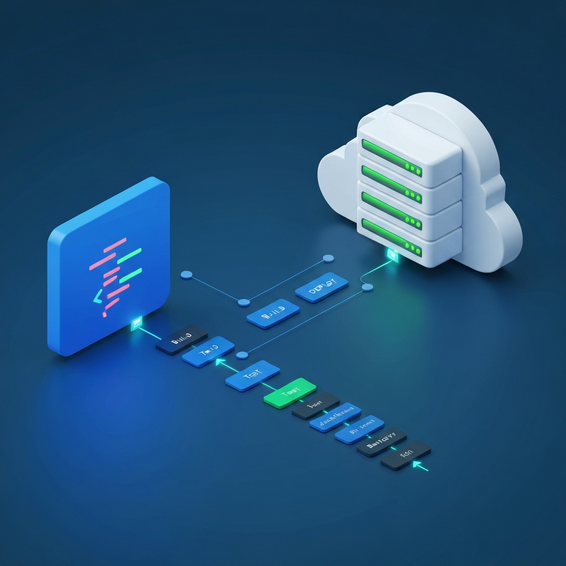
If you want to move away from fragile manual deployments, your first step is to establish a foundational Terraform workflow. Successfully implementing cloud automation requires a strong grasp of its core lifecycle commands. Once you adopt these foundational practices, you’ll be well on your way to building robust, multi-cloud provisioning pipelines right away.
Here are the actionable steps you need to follow to get your very first automated cloud environment up and running smoothly:
- Install Terraform: Download the right binary directly from the HashiCorp website and add it to your machine’s local system path.
- Write Your First Configuration: Start by creating a
main.tffile written in HashiCorp Configuration Language (HCL). This foundational file is where you will define your target cloud provider and outline your basic network resources. - Run Terraform Init: This critical command initializes your current working directory. During this step, Terraform automatically downloads the necessary provider plugins you need to communicate with your chosen cloud API.
- Execute Terraform Plan: You should always preview your infrastructure changes before pushing them live. This vital step reveals exactly which resources are going to be created, modified, or permanently destroyed.
- Apply With Terraform Apply: After you have carefully reviewed and verified the execution plan, run this final command to actually build out your infrastructure in the cloud.
Mastering these fundamental steps lays the essential groundwork for modern infrastructure automation. Not only does it remove the stressful guesswork from your day-to-day operations, but it also delivers a highly repeatable process for effortlessly spinning up new, scalable environments.
Advanced Solutions: Scaling Your Automation
After you have a solid handle on the basic concepts, it is time to start looking at true enterprise-grade configurations. Advanced cloud automation using terraform is all about systematically optimizing the way you write, store, and manage your infrastructure code. To pull this off, you really need to adopt a strong DevOps engineering mindset.
First and foremost, you need to start utilizing Terraform modules. These modules give you the power to cleanly encapsulate your standard configurations so you can reuse them across entirely different projects. This practice keeps your codebase DRY (Don’t Repeat Yourself) and guarantees a tight level of security consistency, even across massive enterprise development teams.
Second, it’s crucial to implement robust Terraform state management. Your state file essentially acts as the ultimate single source of truth for your live infrastructure. If you are working in a production environment, you should never store this critical file on your local machine. Instead, rely on remote backends—like an AWS S3 bucket—and enforce strict state locking with a tool like DynamoDB to prevent multiple team members from modifying the pipeline at the same time.
Finally, you will want to tightly integrate Terraform straight into your continuous integration pipeline. By automating both the planning and applying phases within modern tools like GitHub Actions or GitLab CI, you ensure that all infrastructure changes undergo thorough peer review. This approach treats your underlying infrastructure with the exact same rigorous testing standards that you apply to your front-end application code.
Best Practices for Terraform Deployments
If you want to consistently maximize both performance and security, it’s highly recommended to follow these essential optimization tips. Ignoring industry best practices isn’t just a minor oversight—it can easily lead to exposed user credentials and shockingly bloated monthly cloud bills.
- Use Version Control: Always store your Terraform configurations securely within a centralized Git repository. Taking this step enables detailed tracking of your code changes, provides fast rollback capabilities if things go wrong, and fosters much better cross-team collaboration.
- Secure Your Secrets: You should never hardcode sensitive API keys or database passwords directly into your text files. Instead, rely on secure tools like AWS Secrets Manager or HashiCorp Vault to safely inject those credentials dynamically at runtime.
- Lock Provider Versions: Make it a habit to explicitly specify exact version numbers for your Terraform providers. Doing this effectively prevents unexpected, breaking configuration changes whenever a cloud provider decides to suddenly update its underlying API schema.
- Implement Tagging: Consistently attach custom tags to the cloud resources you create. This simple habit helps tremendously when it comes to tracking financial costs, grouping resources logically, and conducting internal security audits down the line.
- Regularly Format and Validate: Take advantage of built-in terminal commands like
terraform fmtandterraform validateon a regular basis. Running these quick checks ensures your code is cleanly formatted and completely free of syntax errors long before it ever reaches the deployment phase.
Recommended Tools and Resources
You can easily enhance your cloud automation using terraform by pairing the platform with some of these industry-leading DevOps tools. These smart integrations simplify incredibly complex cloud tasks while giving a massive boost to your daily developer productivity.
- Terraform Cloud: This fully managed enterprise service is hosted directly by HashiCorp. It gives your team centralized remote state storage, secure collaboration features, and strict policy-as-code governance controls.
- Terragrunt: Known as a widely popular, thin automation wrapper, Terragrunt provides extra CLI tools specifically designed to keep your Terraform configurations exceptionally DRY. It takes the headache out of managing multiple remote states across various environments.
- TFLint: This powerful, open-source linter framework routinely inspects your infrastructure code for subtle logic errors. It’s incredibly fast at catching deprecated syntax warnings and flagging security best-practice violations before they cause real problems.
- Infracost: Infracost is a unique financial calculation tool that integrates directly into your automated DevOps pipeline. It provides highly accurate cloud cost estimates right in your pull requests, long before you ever hit the apply command.
Frequently Asked Questions (FAQ)
What is cloud automation using terraform?
At its core, it’s the technical process of using HashiCorp’s popular Terraform tool to clearly define, provision, and safely manage your cloud infrastructure resources. This is all done through declarative text files—a highly efficient, standardized method known throughout the tech industry as Infrastructure as Code (IaC).
Does Terraform only work with AWS?
Not at all. Terraform is completely cloud-agnostic by design. It seamlessly supports thousands of different backend providers, including major industry heavyweights like Microsoft Azure and Google Cloud Platform (GCP). In fact, it even offers native support for on-premises virtual machine solutions such as VMware and Proxmox.
What is the difference between Terraform and Ansible?
Think of Terraform as an infrastructure provisioning tool. It’s built for rapidly creating base servers, complex internal networks, and robust databases. Ansible, on the other hand, functions primarily as a configuration management tool. It steps in to install specific software and manage OS settings on the servers you’ve already created. Because their strengths complement each other so well, engineers frequently use them together in modern deployment pipelines.
How do I handle Terraform state files securely?
The best approach is to store your state files in a remote backend system, such as a strictly encrypted AWS S3 bucket. On top of that, you really need to use automated state locking functionality through a tool like Amazon DynamoDB. This protective measure acts as a safeguard, completely preventing dangerous pipeline race conditions when multiple developers are trying to deploy code at the exact same time.
Conclusion
Transitioning fully over to cloud automation using terraform is undeniably one of the most impactful, high-ROI upgrades any IT team can make today. It permanently transforms those fragile, manual deployment processes into reliable, repeatable, and easily scalable cloud operations. When your organization fully embraces Infrastructure as Code concepts, you immediately minimize the risk of human error while drastically speeding up your overall software delivery times.
Start your infrastructure journey today by getting comfortable with the basic lifecycle commands. From there, you can progressively organize your growing codebase into clean, universally reusable Terraform modules. Just remember to secure your backend state files right from day one of your project. As your infrastructure needs evolve, tightly integrating these automated workflows into your broader cloud deployments will seriously supercharge your team’s overall productivity. By embracing these modern IaC practices now, you can finally take full strategic control over your entire cloud infrastructure.
About the Author