How to Automate Business Processes with n8n (Tech Guide)
Are repetitive, manual tasks draining your team’s energy and eating up valuable time? Whether it’s moving data between your Customer Relationship Management (CRM) platforms or managing complicated DevOps pipelines, relying on manual workflows is a surefire way to stall your growth and invite human error. To keep a competitive edge, today’s modern IT teams are adopting robust, developer-friendly workflow automation platforms to handle the heavy lifting.
If you’re looking to slash operational costs while giving your developers a massive productivity boost, it is time to automate business processes with n8n. Unlike typical commercial alternatives—which often come with hefty price tags and strict rate limits—n8n provides a highly scalable, visual canvas. It seamlessly connects your external APIs, internal webhooks, and complex databases without holding you back.
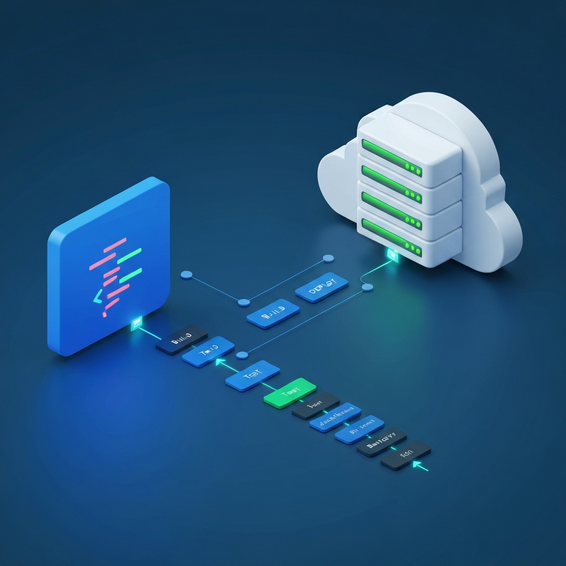
What exactly is n8n? At its core, n8n is a fair-code, node-based workflow automation tool. To successfully automate business processes with n8n, you generally follow these foundational steps:
- Deploy your n8n environment (either through n8n Cloud or self-hosted via Docker).
- Configure secure credentials for all your third-party SaaS applications.
- Create a Trigger Node (such as a Webhook, a CRON Schedule, or a specific App Event).
- Add Action Nodes to fetch, transform, and correctly route your data.
- Save your workflow and activate it so it can run autonomously in the background.
Why This Problem Happens: The Architecture of Data Silos
In today’s corporate landscape, companies run on an incredibly fragmented stack of SaaS applications. Think about it: your sales reps live in Salesforce, your engineering team practically breathes Jira and GitHub, and your customer support staff relies heavily on Zendesk.
Because these distinct platforms rarely offer deep, native interoperability out of the box, data silos inevitably form. When a crucial event triggers in one system, a human usually has to jump in and manually transfer that context over to another. Traditional integration platforms (like Zapier or Make) certainly try to bridge this gap, but they often buckle under the pressure of scaling.
From an IT standpoint, traditional iPaaS (Integration Platform as a Service) solutions tend to abstract away way too much control. They hide the underlying JSON payloads, restrict your ability to build complex logic loops, and slap you with exorbitant fees for every single “task execution.” n8n tackles this technical bottleneck head-on by exposing the raw data, allowing for custom JavaScript logic, and offering truly unlimited executions when you choose to self-host.
Quick Fixes: Basic Solutions to Automate Business Processes with n8n
If you are just dipping your toes into the automation waters, you don’t need to write a single line of complex code to experience immediate value. Here are a few actionable steps to help you roll out basic automation workflows today.
- Set Up Your Environment: The quickest route to getting started is signing up for n8n Cloud. However, if you want total control and zero execution limits, you can easily spin up a basic Docker container on an affordable Virtual Private Server (VPS).
- Automate Lead Routing: Build a workflow where a “Typeform Trigger” instantly captures new lead data. From there, use a “HubSpot Action Node” to log the contact, and follow it up with a “Slack Node” to ping your sales channel right away.
- Streamline Customer Support Tickets: Utilize an “IMAP Email Trigger” to constantly listen for incoming support emails. You can extract the core text, run it through an AI summarization node, and automatically generate a Jira ticket containing all the parsed details.
These straightforward, linear workflows take less than an hour to piece together visually, yet they can save your team hundreds of hours of mind-numbing copy-pasting over the course of a year.
Advanced Solutions for Technical Workflows
For system administrators, DevOps engineers, and full-stack developers, n8n really starts to shine when it’s tasked with complex, non-linear logic. By tapping into its more advanced nodes, you can effectively treat n8n as a lightweight orchestrator for your entire backend infrastructure.
1. Custom API Integrations via HTTP Requests
Let’s face it: not every niche internal tool comes with a pre-built integration node. Thankfully, n8n features a remarkably powerful HTTP Request node. This allows you to effortlessly authenticate via OAuth2, pass along custom headers, and interact with practically any undocumented REST or GraphQL API. It’s an absolute game-changer for syncing legacy ERP systems with modern cloud infrastructure.
2. Direct Database Operations
Rather than relying solely on APIs, n8n can hook directly into your actual databases (including PostgreSQL, MySQL, MongoDB, and Redis). This means you can design reliable ETL (Extract, Transform, Load) pipelines that run quietly every night. A single workflow can query millions of rows, aggregate the necessary data, and automatically push the finalized report straight into an Amazon S3 bucket.
3. Custom Code Transformations
Purely visual tools notoriously struggle when it comes to complex array manipulations. However, with n8n’s dedicated “Code Node,” you have the freedom to write custom JavaScript or Python. This flexibility lets you map highly complex, nested JSON structures, execute cryptographic hashing, or format dates with absolute precision before passing the data down the line to the next node.
4. Webhook and Error Handling Architecture
In real-world production environments, workflows will occasionally fail due to unexpected API downtime or strict rate limits. n8n accounts for this by letting you design an “Error Trigger” workflow. If your primary process hits a wall, this robust secondary workflow catches the error payload, logs the issue to a monitoring service like Sentry or Datadog, and instantly alerts your on-call engineer.
Best Practices for n8n Automation
When you decide to automate business processes with n8n at an enterprise scale, it is crucial to treat your workflows exactly like production software. To ensure stability and security, stick to these best practices:
- Secure Credentials via Environment Variables: You should never hardcode your database passwords or API keys directly into Code nodes. Always take advantage of n8n’s built-in credential manager, which is specifically designed to store your secrets securely.
- Utilize Sub-Workflows: Massive, sprawling workflows can become a nightmare to debug. Rely on the “Execute Workflow” node to segment large processes into smaller, modular, and reusable components (for example, creating a standalone “Send Slack Alert” sub-workflow).
- Optimize Execution Configurations: If you are self-hosting to manage heavy workloads, be sure to configure n8n to use Postgres and Redis. By setting `EXECUTIONS_MODE=queue`, you activate worker nodes that prevent memory crashes during sudden, high-volume webhook spikes.
- Implement Version Control: Always treat your automation as code. Set up a schedule to automatically export your workflow JSON files and push them safely to a private GitHub repository every day.
Recommended Tools and Resources
To squeeze every ounce of potential out of your n8n workflow automation, consider pairing the platform with these incredibly helpful developer productivity tools:
- Docker & Docker Compose: Hands down the most reliable way to deploy a self-hosted n8n instance in a clean, isolated, and reproducible environment.
- DigitalOcean or Linode: Excellent, budget-friendly cloud VPS providers. A basic $6 to $12-a-month droplet offers more than enough power to process thousands of automated tasks every single day.
- Portainer: A sleek, lightweight GUI tailored for managing Docker containers. It takes the headache out of restarting your n8n instance or combing through server logs.
- PostgreSQL: The go-to database backend for n8n. It is highly recommended to make the switch to Postgres from the default SQLite setup once you start scaling for enterprise needs.
Frequently Asked Questions (FAQ)
Is n8n better than Zapier?
If you’re a technical user, a developer, or part of an IT team, the answer is a resounding yes. While n8n offers an intuitive visual interface, it also gives you the freedom to pop the hood and dive right into the raw JSON and code. Perhaps most importantly, choosing to self-host n8n completely eliminates the expensive “per-task” pricing models that platforms like Zapier enforce, ultimately saving businesses thousands of dollars each year.
Do I need to know how to code to use n8n?
Not at all. You can easily construct incredibly powerful basic and intermediate workflows using nothing but the visual drag-and-drop nodes. That said, having a foundational grasp of JavaScript and JSON will undoubtedly help you unlock the platform’s full potential for highly advanced data manipulation.
Is n8n truly open source?
n8n is distributed under a “fair-code” license. This means it is entirely free to download, self-host, and utilize for all your internal company workflows. However, there are a few specific restrictions in place if your goal is to build a commercial SaaS product that directly resells n8n’s core functionality.
Conclusion
Relying on constant human intervention to shuttle data between completely disconnected systems is a massive operational bottleneck. When you take the leap to automate business processes with n8n, you reclaim countless lost hours, wipe out costly data entry errors, and free up your IT team to focus on what they do best: core product development.
Whether your goal is to implement a straightforward CRM sync or architect an intricately complex, cross-database ETL pipeline, n8n strikes the perfect balance. It delivers a highly approachable, visual canvas without sacrificing deep technical flexibility. Stop bleeding your budget on per-task execution fees from restrictive platforms. Spin up a Docker container today, and start designing robust automation workflows that will effortlessly scale alongside your growing business.
About the Author