Best AI Workflow Automation Tools for Developers: A Complete Guide
If you find yourself worn out by repetitive coding tasks, marathon debugging sessions, and sluggish deployment pipelines, you certainly aren’t alone. As modern software engineering continues to scale, leaning on manual processes just isn’t sustainable anymore. That is exactly why pinpointing the best AI workflow automation tools for developers has become so critical for staying competitive in today’s fast-moving tech landscape.
From writing boilerplate code to fine-tuning complex CI/CD pipelines, artificial intelligence is completely redefining what developer productivity looks like. The reality is simple: teams that actively embrace AI automation are shipping software faster, dealing with fewer bugs, and cutting costs in the process.
In this comprehensive guide, we are going to break down exactly why development bottlenecks happen and how AI can seamlessly resolve them. Along the way, you will discover practical fixes, advanced engineering strategies, and a carefully curated lineup of the best AI workflow automation tools for developers. Whether you are a solo indie hacker or a senior engineer managing an enterprise architecture, weaving these technologies into your daily routine will totally supercharge your workflow.
Why You Need the Best AI Workflow Automation Tools for Developers
Let’s face it: no software development lifecycle (SDLC) is perfectly efficient. Bottlenecks naturally emerge as architectural requirements grow more complex, codebases expand, and legacy infrastructure starts showing its age. Without an automated coding workflow in place, developers end up wasting valuable hours on tedious tasks that don’t add real value to the product.
Usually, the root cause of these slowdowns is a highly fragmented toolchain. When your version control system, testing frameworks, and deployment servers fail to communicate intuitively, human intervention becomes the only way to push things forward. This constant context switching breaks your flow state, opens the door for human error, and ultimately derails important release schedules.
On top of that, reviewing pull requests, scripting unit tests, and executing database migrations are repetitive chores. As your application scales up, the cognitive load on your engineering team increases exponentially. This is the exact pain point where AI developer tools shine. By handing off these menial tasks to smart machine learning models, your engineers get their time back—allowing them to focus on what really matters: creative problem-solving and higher-level system architecture.
Quick Fixes / Basic Solutions to Automate Your Workflow
If you want to start leveraging the best AI workflow automation tools for developers right away, you don’t need to rip out and rebuild your entire infrastructure. Instead, you can kick things off with a few simple, highly effective integrations that deliver immediate results.
- Implement an AI Code Assistant: Plugging tools like GitHub Copilot or Tabnine directly into your favorite IDE is a game changer. These extensions serve up real-time code completion, drastically cutting down the time you spend typing out boilerplate syntax or repeating standard logic.
- Automate Code Reviews: Bring AI-driven PR (Pull Request) reviewers into your Git workflow. These intelligent bots will scan your commits for security vulnerabilities, stylistic inconsistencies, and common bugs before a human reviewer even has to look at the code.
- Generate Unit Tests Instantly: Stop skipping your test coverage. You can use AI extensions to simply highlight a block of code and automatically generate the corresponding unit tests, saving you from hours of tedious, manual scripting.
- Adopt Smart Commit Messages: Pair a tool like Commitizen with an AI plugin to analyze your staged changes. The AI can instantly generate descriptive, highly standardized commit messages that keep your Git history clean and readable.
- Streamline Documentation: Nobody loves writing docs, so let AI handle your code documentation and docstrings. This ensures your codebase remains highly readable and well-documented without draining hours of your time.
By putting these quick fixes into practice, you can easily win back several hours of productive coding time every single week. They take just minutes to set up and offer an incredible return on investment for developers across all skill levels.
Advanced Solutions: Enterprise AI and DevOps Integration
If you are a senior engineer, a DevOps professional, or part of a large enterprise team, basic IDE autocomplete just isn’t going to cut it. To truly tap into the power of artificial intelligence, you need to weave it deeply into your system architecture, testing environments, and deployment pipelines.
1. AI-Driven CI/CD Pipelines
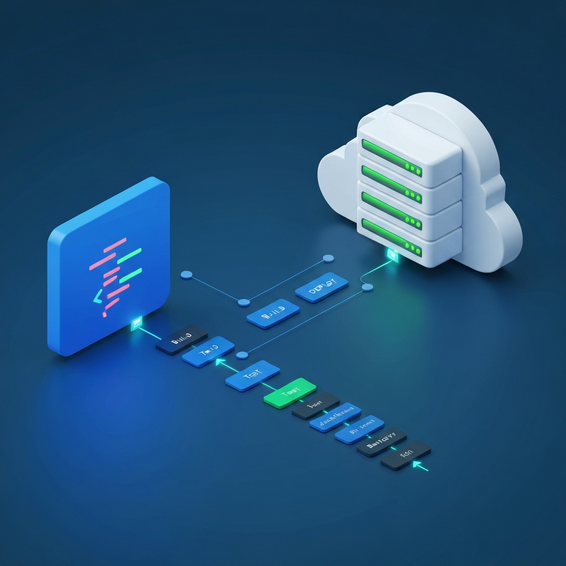
Modern software delivery relies heavily on robust continuous integration and deployment. By baking DevOps AI automation straight into your CI/CD pipelines, you gain the ability to predict build failures before they actually happen. AI models can evaluate your historical deployment data to flag high-risk pull requests and automatically pause unstable builds—ultimately saving your team from catastrophic production outages.
2. Automated Infrastructure as Code (IaC)
Provisioning cloud resources through Terraform, Kubernetes, or Ansible is a notoriously complex job. Fortunately, advanced AI tools can now analyze your application’s unique resource demands and spit out highly optimized IaC scripts. This guarantees that your cloud environments remain cost-effective and perfectly scalable, all without the headache of manual configuration tracking.
3. Local AI Deployments for Privacy
Many enterprise development teams work with strictly proprietary code that absolutely cannot be fed into public APIs like OpenAI or Anthropic. The solution? Setting up local Large Language Models (LLMs) via tools like Ollama. This approach allows you to run a secure, self-hosted, automated coding workflow without ever compromising on data privacy or violating compliance regulations.
4. Database and API Automation
AI models have become remarkably good at writing complex SQL queries and spinning up REST or GraphQL API endpoints. By using natural language prompts to interact with your database during the development phase, you can massively accelerate schema creation and data migrations. It also helps minimize the risk of executing heavy, unoptimized queries that could slow down your application.
Embracing these advanced solutions will fundamentally change the way your engineering department operates. By marrying artificial intelligence with modern DevOps practices, you are essentially building a self-healing, hyper-efficient software factory.
Best Practices for AI Workflow Automation
While AI brings incredible speed and efficiency to the table, rolling it out recklessly can leave you drowning in technical debt, security flaws, and bloated code. Sticking to a few core best practices ensures your new tools function as powerful assets rather than risky liabilities.
- Never Expose Secrets: Double-check that your AI tools are strictly configured to ignore environment variables, API keys, and database credentials. You must be rigorous about using .gitignore and environment masking tools.
- Maintain Human Oversight: Remember, the best AI workflow automation tools for developers are meant to be assistants, not complete replacements. You should always require human sign-off for pushing to production, making core architectural changes, and executing major refactors.
- Optimize Context Windows: When you ask an AI tool to analyze your code, give it very specific, isolated context. Dumping your entire monolithic codebase into a single prompt is a recipe for hallucinations, sluggish performance, and wildly inaccurate suggestions.
- Regularly Audit AI Dependencies: Just as you would with NPM, Maven, or Python packages, you need to keep your AI plugins and automation scripts updated. Audit them frequently for potential security vulnerabilities.
- Standardize Across Teams: To avoid a chaotic, fragmented workflow, make sure your whole engineering team is playing by the same AI rules and using the same standard tools. Consistency is the best way to prevent messy merge conflicts and configuration headaches.
Taking these security and performance guidelines seriously will keep your entire development lifecycle locked down and running smoothly. Ultimately, it allows you to push developer productivity to the absolute limit without sacrificing an ounce of code quality.
Recommended Tools / Resources
Finding success with automation largely comes down to picking the right technology stack. Below are some of the absolute best productivity tools for programmers, cloud architects, and DevOps engineers who are ready to embrace an automated workflow.
- GitHub Copilot: Widely considered the industry standard for AI pair programming. It hooks seamlessly into VS Code, JetBrains, and Neovim to provide unmatched, context-aware code completion.
- Cursor IDE: A brilliant, AI-first code editor built directly on top of the VS Code framework. It lets you chat natively with your codebase, making deep refactoring and complex debugging feel effortless.
- Tabnine: A highly secure alternative that utilizes entirely private, locally hosted AI models. It is the perfect fit for enterprise teams navigating strict compliance laws and intellectual property constraints.
- CodiumAI: An incredible tool laser-focused on generating robust test suites. It automatically analyzes your code’s integrity before you push to the repository, effortlessly catching the edge cases that humans usually miss.
- Pieces for Developers: Think of this as a highly intelligent micro-repo. It uses AI to save, enrich, and retrieve complex code snippets across your entire workflow, acting as an amazing organizational asset for busy developers.
Integrating even just one or two of these platforms can wildly improve your automated coding workflow. Take the time to evaluate them against your team’s unique budget, existing cloud infrastructure, and security mandates to find the perfect fit.
FAQ Section
What are the best AI workflow automation tools for developers?
Right now, the top tools dominating the market include GitHub Copilot for rapid, general-purpose code generation, Cursor IDE for an immersive AI-native editing experience, CodiumAI for building out automated testing, and Tabnine for highly secure, privacy-focused enterprise environments.
How does AI improve DevOps automation?
AI steps up DevOps by predicting deployment crashes before they happen, automating how infrastructure scales, and making server log analysis much faster. This specific type of DevOps AI automation drastically reduces application downtime, cuts out human error, and speeds up your continuous delivery pipeline.
Are AI developer tools safe to use with proprietary code?
Absolutely, as long as you choose the appropriate tools and configure them with security in mind. While passing data to public AI models does carry some leakage risk, utilizing enterprise-grade tools like Tabnine or running local LLM deployments via Ollama guarantees that your proprietary code stays securely on your own private servers.
Can AI completely replace software engineers?
Not at all. AI functions as a massive productivity multiplier, but it is nowhere close to replacing human ingenuity. While it is fantastic at generating boilerplate, spotting bugs, and handling repetitive automation, it simply lacks the big-picture architectural vision that complex software engineering demands.
Conclusion
Bringing artificial intelligence into your daily routine is no longer just a nice-to-have perk; it is an absolute necessity for modern engineering teams. Utilizing the best AI workflow automation tools for developers empowers you to write much cleaner code, push deployments out faster, and completely scrub tedious manual tasks from your daily schedule.
By recognizing exactly where your workflow bottlenecks happen and rolling out both quick wins and advanced CI/CD integrations, you can totally transform your productivity baseline. Just remember to always stick to security best practices, guard your environment secrets fiercely, and keep a watchful human eye over your automated deployment pipelines.
Start small by bringing an AI assistant into your IDE today, and slowly grow your automation strategy until it covers your entire software development lifecycle. The future of software engineering is highly automated, deeply intelligent, and incredibly efficient—so make sure you and your team are fully prepared for the ride.
About the Author