10 Best Productivity Tools for Software Engineers to Work Faster
Let’s face it: the sheer volume of tasks thrown at developers these days is a fast track to burnout. Sometimes, figuring out a smooth workflow feels just as complicated as writing the actual code. That’s why finding the best productivity tools for software engineers is so critical right now. Whether you’re drowning in bug reports, constantly context-switching between projects, or wrestling with a sprawling codebase, having the right suite of developer productivity software isn’t just a nice-to-have anymore. It’s an absolute necessity.
A modern developer’s day is incredibly fragmented. We aren’t just expected to write elegant code anymore; we’re also managing infrastructure, sitting through daily stand-ups, reviewing peer pull requests, and pushing applications to the cloud. If you don’t have a streamlined approach to handle it all, these scattered responsibilities will quickly chip away at the “flow state” you need to get deep, meaningful engineering work done.
In this guide, we’ll break down the real reasons behind developer inefficiency and share practical, hands-on ways to fix them. We’ll cover everything from quick adjustments to advanced development setups, and wrap up with a curated list of top-tier tools designed to boost your daily output. Let’s dive into how you can optimize your environment, cut through the chaos, and finally win back your time.
Why You Need the Best Productivity Tools for Software Engineers
More often than not, software engineers aren’t bogged down by the actual coding—they’re slowed down by the friction surrounding it. This friction leads to massive drops in productivity, with context-switching being the biggest offender. Jumping back and forth between Slack, Jira, GitHub, and your local IDE completely shatters your concentration. In fact, studies consistently show it can take over twenty minutes just to regain your focus after a single interruption.
Poorly managed technical debt and clunky software development workflows are also massive productivity killers. When a codebase is missing proper documentation or solid automated testing frameworks, you end up wasting hours debugging instead of actually building new features. If your environment isn’t set up right, simple updates that should take ten minutes can easily spiral into a multi-day ordeal.
Finally, let’s talk about manual infrastructure management. If you’re still manually provisioning servers, deploying code via FTP, or running tests locally without a CI/CD pipeline, your efficiency is taking a serious hit. The mental energy required to juggle all those operational chores directly eats into your pure development time. This is exactly where developer productivity software steps in—automating the mundane tasks so you can focus on solving complex problems.
Quick Fixes / Basic Solutions to Boost Efficiency
Before you go out and spend a fortune on premium subscriptions or completely overhaul your entire architecture, try starting with a few foundational tweaks. These quick fixes target the low-hanging fruit and can instantly improve your coding efficiency.
- Standardize your dev environment setup: Make sure everyone on your team is using the exact same setup by relying on containerization tools like Docker. This completely eliminates the classic “it works on my machine” excuse and saves your new hires countless hours during onboarding.
- Master your keyboard shortcuts: Whether your weapon of choice is VS Code, IntelliJ, or Vim, memorizing the native hotkeys for your code editors and IDEs will easily shave hours off your week. Navigating without reaching for your mouse dramatically speeds up how quickly you can write and manipulate text.
- Implement strict timeboxing: Give techniques like the Pomodoro method a try. By forcing yourself into short, highly focused bursts of coding (usually around 25 to 50 minutes) followed by a mandatory break, you can significantly reduce both cognitive fatigue and eye strain.
- Automate local linting and formatting: Configure Prettier or ESLint to run the moment you hit save. This ensures a beautifully uniform codebase and completely eliminates those pointless arguments over code style during pull requests.
- Utilize clipboard managers: Apps like Maccy or Ditto let you keep a running history of everything you copy. When you’re juggling API keys, reusable code snippets, and complex terminal commands, having a robust clipboard manager feels like an instant superpower.
Putting these simple, actionable steps into practice builds a surprisingly robust foundation for time management for developers. They free up your mental bandwidth, allowing you to shift your focus away from frustrating logistical hurdles and back to writing core business logic.
Advanced Solutions for Technical Workflows
Of course, for senior developers, IT professionals, and DevOps engineers, basic fixes will only take you so far. If you really want to scale productivity across an entire engineering team, you need to make systemic, architectural changes to how your software is developed, tested, and shipped.
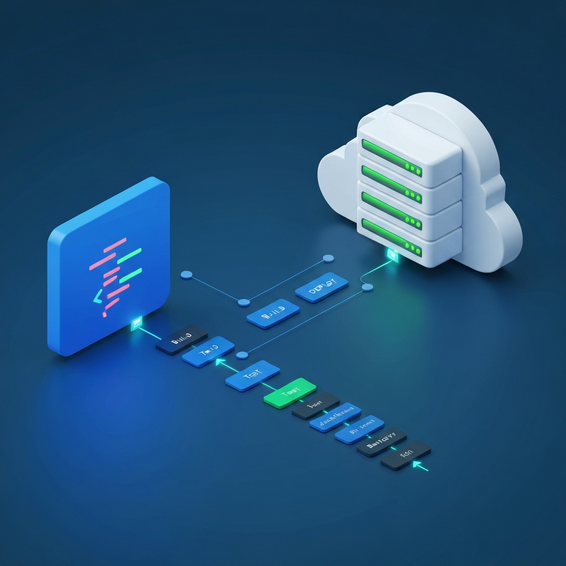
First off, you need to integrate fully automated CI/CD pipelines. Leveraging tools like GitHub Actions, CircleCI, or GitLab CI ensures that every single commit is automatically tested, built, and staged. This drastically cuts down on manual Quality Assurance (QA) testing and speeds up your release cadence. Plus, if a build happens to break, the responsible developer gets pinged instantly, which shrinks the feedback loop right down.
Next, it’s time to adopt Infrastructure as Code (IaC). Using platforms like Terraform, Ansible, or AWS CloudFormation lets you version-control your server environments exactly like you do your application code. This approach guarantees rapid disaster recovery and perfectly consistent deployments across both staging and production. Best of all? It means you spend way less time manually clicking through confusing cloud provider consoles.
Third, consider shifting toward Remote Development Environments. Modern platforms like GitHub Codespaces or Gitpod allow your engineers to spin up fully configured, cloud-based IDEs in a matter of seconds. This effectively eliminates local hardware bottlenecks and guarantees a fresh, pristine environment for every single project.
Finally, don’t skimp on robust observability and monitoring. By weaving Datadog, New Relic, or Prometheus into your stack, you’ll never have to hunt through massive raw text files when a production error inevitably happens. Instead, you get instant alerts complete with highly detailed stack traces. It transforms debugging from a blind, frustrating hunt into a fast, precise surgical strike.
Best Practices for Sustainable Productivity
At the end of the day, tools are only as effective as the engineering culture and internal processes that govern them. Sticking to proven industry best practices ensures that your team’s newfound speed doesn’t accidentally compromise your system’s security or overall application performance.
- Keep dependencies updated automatically: Hand this chore over to automated bots like Dependabot or Renovate. They will routinely scan your repositories and automatically open pull requests for any outdated libraries. This keeps critical security vulnerabilities patched up without anyone having to intervene manually.
- Embrace asynchronous communication: Do whatever you can to reduce unnecessary, flow-breaking meetings. Instead of scheduling yet another synchronous video call to explain a complex technical concept, try recording a quick screen share or writing up a highly detailed Jira ticket.
- Enforce strict code review standards: Make it a rule to keep your pull requests small and tightly scoped. A PR with 200 lines of code gets a thorough, thoughtful review. A PR with 2,000 lines? That usually just gets skimmed and blindly approved. Smaller PRs naturally lead to much faster merges and far better quality control.
- Secure your secrets comprehensively: It should go without saying, but never hardcode your API keys or database credentials. Always rely on environment variables and secure secret vaults—think HashiCorp Vault, Doppler, or AWS Secrets Manager—to maintain airtight security within your software development workflows.
- Maintain living documentation: Use tools like Notion, Confluence, or even simple Markdown files right inside your repo to keep track of major architectural decisions. Good documentation is a massive, often overlooked time-saver when it comes to troubleshooting issues or onboarding new team members.
Recommended Tools / Resources
If you want to build a truly modern, frictionless tech stack, you need the right arsenal at your disposal. Below is a curated list of the top developer tools across several technical categories. Every ambitious engineer should seriously consider integrating these into their workflow today.
1. Code Editors and AI Assistants
Visual Studio Code (VS Code): There’s a reason this is the undisputed industry standard for code editors and IDEs. It’s incredibly lightweight, endlessly customizable, and boasts a massive extension marketplace that has you covered no matter what language you’re writing in.
GitHub Copilot: This revolutionary AI pair programmer is changing the game by suggesting code snippets, writing unit tests, and even generating entire functions directly inside your editor. Relying on Copilot drastically cuts down on typing tedious boilerplate and looking up obscure syntax. Try GitHub Copilot here to experience AI-assisted coding firsthand.
2. Task and Time Management
Linear: This is a modern, ridiculously fast issue tracker that has quickly become a favorite among high-performance engineering teams. Because it operates heavily on keyboard shortcuts, it keeps you locked in the zone instead of forcing you to click around clunky UI menus.
RescueTime: This is a fantastic background utility specifically tailored for time management for developers. It runs silently while you work, tracking exactly where your digital time goes. It’s perfect for helping you identify your most productive deep-work windows and actively blocking those websites that distract you.
3. API and Database Tools
Postman / Insomnia: These are absolute must-haves for building, testing, and debugging APIs. They make it incredibly easy to save your requests, natively manage various environment variables, and fully automate your endpoint testing workflows.
DBeaver: Think of this as your universal database tool. Whether you’re a developer or a database administrator, DBeaver supports SQL, NoSQL, and cloud databases all from one single, clean interface. It completely saves you the headache of installing half a dozen proprietary clients.
4. Terminal and CLI Mastery
Warp: Say hello to a modern, GPU-accelerated, Rust-based terminal designed for macOS and Linux. Honestly, it functions much more like a modern code editor than a traditional terminal, giving you IDE-like text editing, visual blocks, and even a built-in AI command search.
Raycast: If you’re on a Mac, this tool is a daily productivity powerhouse. It acts as a highly extensible replacement for Spotlight. From a single search bar, you can manage your GitHub PRs, execute bash scripts, decode base64 strings, and perfectly arrange your window layouts.
Frequently Asked Questions
What are the most essential productivity tools for software engineers?
The bare essentials usually include a robust IDE (think VS Code or JetBrains), a reliable distributed version control system (Git/GitHub), an AI-powered coding assistant (like GitHub Copilot), and a speedy, low-friction issue tracker (such as Linear or Jira). Together, these tools form the core foundation of any modern, efficient software development workflow.
How do AI tools improve developer productivity?
AI tools like ChatGPT, Claude, and GitHub Copilot step in to automate repetitive coding chores, generate annoying boilerplate syntax, and even help untangle complex debugging issues. By taking over the tedious side of code generation, they let engineers save their mental energy for what really matters: designing high-level system architecture and solving unique problems.
Is it better to use many specialized tools or one all-in-one platform?
Honestly, this heavily depends on the size of your engineering team and your specific needs. Startups tend to thrive on all-in-one platforms (like GitLab) because it reduces context switching, keeps billing simple, and centralizes access control. On the flip side, mature enterprise teams usually lean toward best-in-class specialized tools that they wire together via APIs. This allows them to handle massive, highly complex systems without having to compromise on functionality.
How can I reduce context switching as a developer?
If you want to cut down on context switching, start by consolidating your active notifications. Make it a habit to explicitly block out uninterrupted deep-work time on your calendar. Also, leverage smart integrations to pull critical information right into your primary workspace. A great example is hooking up Jira and GitHub directly into Slack—that way, you can easily review ticket statuses and PR comments without opening a dozen new browser tabs.
Conclusion: Elevate Your Developer Workflow
Fine-tuning your day-to-day routine as an engineer isn’t a one-and-done deal; it’s an ongoing, constantly evolving journey. Once you truly understand the root causes of your inefficiency—whether that’s unchecked context switching, mounting technical debt, or tedious manual deployments—you can start taking actionable steps to win back your focus. Start small by tweaking your local dev environment setup, then work your way up to embracing advanced CI/CD pipelines and strictly enforcing security best practices.
Whether you decide to bring on an AI pair programmer, streamline your clunky terminal experience, or completely revamp how you track issues, integrating the best productivity tools for software engineers will make a night-and-day difference in both your output and your long-term job satisfaction. Take a little time today to honestly evaluate your current stack. Implement just a handful of these recommended solutions, and you’ll quickly watch your daily coding efficiency soar to whole new heights.
About the Author