11 DevOps Tools Every Developer Should Learn in 2024
Let’s face it: the traditional boundary between writing code and deploying it has practically vanished. In today’s competitive software industry, simply typing out logic and calling it a day isn’t enough to thrive. For modern engineers, knowing exactly how your code is built, tested, and sent out into the wild is an absolute must-have skill.
This shift in responsibilities is precisely why getting comfortable with the devops tools every developer should learn stands out as a major career milestone. It doesn’t matter if you are piecing together a straightforward web app or juggling a massively complex microservices architecture. When you blend DevOps practices into your daily routine, you effectively eliminate deployment anxiety while giving your overall productivity a massive boost.
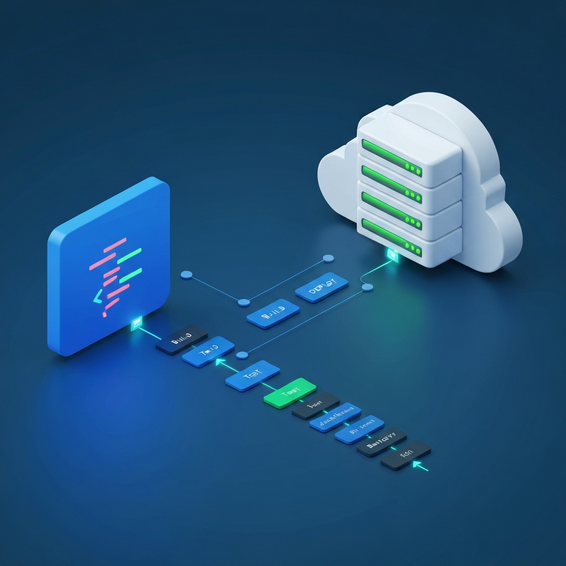
So, what are the essential DevOps tools every developer should learn? At a minimum, your toolkit needs to include Git for reliable version control, Docker for seamless containerization, and GitHub Actions or Jenkins to handle CI/CD automation. From there, you’ll want to add Terraform for Infrastructure as Code (IaC) and Kubernetes to tackle container orchestration.
In this comprehensive guide, we are going to walk through the essential technologies that finally bridge the gap between development and operations. We’ll break down exactly why they matter and show you how integrating them can completely supercharge the way you code every single day.
Why You Need the DevOps Tools Every Developer Should Learn
Historically, developers would finish a feature and blindly toss it over the proverbial wall to the operations team for deployment. As you might expect, this disconnected approach created massive bottlenecks and endless frustration. We’ve all been there: an application runs flawlessly on your local machine but instantly crashes the moment it hits production, turning the troubleshooting process into an absolute nightmare.
That kind of friction naturally builds up when environments don’t match, testing is done manually, and developers lack visibility into how servers are actually configured. When you don’t have a standardized, reliable deployment pipeline, human error inevitably finds its way into deployment scripts. The end result? Extended downtime, panicked hotfixes, and deeply frustrated users.
Adopting a DevOps mindset tackles these issues head-on by bringing automation, reliable consistency, and shared ownership to the table. When developers actually understand the infrastructure running their applications, they naturally write cleaner, more resilient code. Embracing this “shift-left” mentality means you catch sneaky bugs and glaring security vulnerabilities early in the software development lifecycle, rather than discovering them the hard way on release day.
Quick Fixes: Basic DevOps Tools to Start With
If you are stepping into the infrastructure side of things for the very first time, don’t panic—you do not need to learn everything overnight. Start your journey with these foundational tools. They offer immediate, actionable ways to clean up your workflow right now.
- Git and GitHub/GitLab (Version Control)
Without a doubt, Git remains the undisputed king of version control. While almost every developer knows how to commit and push changes, mastering the more advanced Git workflows is a core DevOps requirement. Getting completely comfortable with branching strategies, smoothly resolving tricky merge conflicts, and conducting thorough pull request reviews sets the perfect stage for continuous integration. - Docker (Containerization)
We can finally retire the classic “it works on my machine” excuse, and we have Docker to thank for that. Docker neatly wraps up your application and all of its dependencies into one highly portable container. This guarantees that your software behaves the exact same way on a local testing setup as it does on a live production server. Knowing how to write a clean, efficientDockerfileis absolutely mandatory these days. - GitHub Actions (Basic CI/CD)
Continuous Integration and Continuous Deployment (CI/CD) pipelines take the manual labor out of testing and releasing code. GitHub Actions is a phenomenal starting point because it is beginner-friendly, incredibly robust, and already built right into your repository. You can configure it to automatically trigger unit tests and spin up new container images the second you push code to your main branch. - Postman (API Testing and Automation)
Most people still view Postman merely as a handy API client, but it has quietly evolved into a seriously powerful DevOps tool. Today, developers leverage it to script automated API tests and plug them directly into their CI/CD pipelines using Newman (which is Postman’s command-line collection runner).
Advanced Solutions for Complex Workflows
Once you have completely nailed down the basics, you might find yourself needing more firepower. These advanced solutions are heavily relied upon by top-tier Dev and IT ops teams to scale massive applications without breaking a sweat.
- Kubernetes (Container Orchestration)
If Docker is the instrument that helps you create containers, Kubernetes (often called K8s) is the conductor that manages them at scale. When you are dealing with massive traffic spikes or a sprawling web of microservices, Kubernetes steps in to automatically handle load balancing, auto-scaling, and even self-healing if a container crashes. The learning curve is notoriously steep, but grasping core concepts like Pods, Deployments, and Services is worth its weight in gold. - Terraform (Infrastructure as Code)
Manually clicking around a web console to configure servers is a slow, risky, and highly unscalable habit. Terraform changes the game by letting you define your entire cloud infrastructure using simple, human-readable configuration files. This means you can version control your servers, databases, and network rules exactly like you do with your application code. Plus, it plays nicely with major cloud providers like AWS, Azure, and Google Cloud. - Ansible (Configuration Management)
While Terraform is fantastic for provisioning your infrastructure, Ansible is the absolute master of configuring what goes inside it. Ansible empowers you to automate software setups, manage configuration files, and deploy applications across hundreds of different servers at the exact same time—all without needing to install heavy, resource-draining agents. - Prometheus and Grafana (Monitoring and Observability)
Pushing code live is only half the battle; understanding how that code behaves in the wild is where the real work begins. Prometheus is an incredible open-source monitoring tool that constantly scrapes performance metrics from your applications. Grafana then takes all of that raw data and turns it into stunning, real-time dashboards, alerting you to sneaky memory leaks long before your users ever notice a problem.
Best Practices for Implementing These Tools
Bringing these automation technologies into your daily grind will absolutely transform your software development lifecycle. However, you will only see those benefits if you follow some tried-and-true industry best practices.
- Start Small and Iterate: Please, do not try to implement Kubernetes, Terraform, and a massive enterprise-grade CI/CD pipeline in a single weekend. Take it step-by-step. Start by simply containerizing your current application with Docker, and then gradually introduce some basic automated testing.
- Prioritize Security (DevSecOps): Automation moves incredibly fast, which unfortunately means that security vulnerabilities can be pushed to production just as quickly. You should always weave security scanning directly into your CI/CD pipelines. Tools like SonarQube or Trivy will automatically flag your Docker images and raw code for known vulnerabilities before they go live.
- Never Automate a Broken Process: If your current manual deployment process is chaotic, undocumented, and prone to breaking, automating it will only result in things failing much faster. Take the time to standardize and document your actual workflow before you sit down to write a single line of automation scripting.
- Embrace Infrastructure as Code: Make it a habit to store your infrastructure definitions in the exact same repository as your application code. Doing this ensures that your software logic and the environment it relies on evolve perfectly in sync.
Recommended Tools and Resources
Fleshing out a proper developer toolkit requires access to reliable platforms where you can experiment. Here are a few of our top recommendations to help you practice your new skills and deploy with confidence:
- Cloud Providers: Both DigitalOcean and AWS are brilliant playgrounds for testing out your newly containerized apps. They offer managed Kubernetes services that strip away a massive amount of the painful initial setup process.
- CI/CD Platforms: When it comes to automating your deployments, GitLab CI, CircleCI, and GitHub Actions remain the absolute industry favorites.
- Internal Reading: If you want a step-by-step walkthrough on creating streamlined deployment workflows, definitely check out our guide on setting up automation pipelines.
- Home Server Testing: Prefer to tinker locally before paying for cloud space? Learn how to safely spin these tools up in our HomeLab section, which is the perfect sandbox for consequence-free experimentation.
Frequently Asked Questions (FAQ)
Do I need to learn all DevOps tools at once?
Absolutely not. The best approach is to start small with Git and Docker. Once you feel completely comfortable wrapping your apps in containers, you can naturally progress into building CI/CD pipelines. You can easily hold off on those heavy-duty orchestration and configuration tools until you are actually tasked with managing complex, distributed cloud infrastructure.
Are DevOps tools only for senior developers?
Not at all! In fact, junior developers who already grasp the basics of CI/CD, version control, and containerization are incredibly highly sought after by recruiters. Having hands-on experience with these tools on your resume immediately sets you apart from the sea of candidates who only know how to write code.
Which DevOps tool should I learn first?
Docker is widely recognized as the absolute best starting point. It fundamentally rewires how you think about application dependencies, and it acts as the essential building block you’ll need before tackling more advanced systems like Kubernetes or automated delivery pipelines.
Does learning DevOps make me a DevOps Engineer?
Not necessarily. A dedicated DevOps Engineer usually spends their entire day focused purely on infrastructure, deployment pipelines, and site reliability. However, a developer armed with DevOps knowledge simply uses these tools to ensure their own features are shipped safely and reliably. Ultimately, it just makes you a much more capable, self-sufficient Software Engineer.
Conclusion
Stepping out of the traditional “just a coder” box to become a fully well-rounded engineer requires a genuine shift in how you view the software lifecycle. By taking the time to master the devops tools every developer should learn, you will build exceptionally resilient applications, completely eliminate the stress of deployment days, and give your career trajectory a massive boost in a crowded job market.
Whether you are just spinning up a simple Docker container to test something locally, or you are scripting complex Infrastructure as Code with Terraform, the end goal is always exactly the same: delivering software faster, safer, and with perfect consistency. Start weaving these essential tools into your daily workflow today, and watch your engineering productivity soar to entirely new heights.
About the Author