How to Automate Daily Tasks Using AI: A Complete Technical Guide
Do you feel like you’re wasting hours on repetitive, low-value chores instead of focusing on the big picture? Figuring out how to automate daily tasks using ai isn’t just a passing trend for tech nerds anymore—it’s a must-have skill if you want to seriously scale your productivity. Let’s face it: in our fast-paced digital landscape, manual workflows have become a massive bottleneck that slows down developers, IT pros, and business owners alike.
Artificial Intelligence has come a long way from being just a theoretical concept; today, it’s a highly practical utility we can use every single day. Whether you’re stuck combing through server logs, responding to the same customer emails over and over, or organizing messy databases, modern AI tools are perfectly equipped to do the heavy lifting for you. Once you weave a seamless machine learning workflow into your daily routine, you’ll reclaim hours of lost time and practically eliminate the risk of human error.
Throughout this comprehensive technical guide, we’ll break down exactly how to put AI to work for you. We’ll look at why traditional manual workflows inevitably fail, share some actionable quick fixes for immediate relief, and then dive deeper into advanced technical setups tailored for developers and DevOps engineers. Ready to transform the way you handle your daily operations? Let’s jump right in.
Why You Need to Know How to Automate Daily Tasks Using AI
Before we can fully appreciate the impact of AI on our personal productivity and enterprise efficiency, we really need to understand why traditional manual workflows eventually fall apart. As humans, we excel at creative problem-solving, empathy, and high-level strategic thinking. On the flip side, our brains just aren’t wired to handle highly repetitive, robotic tasks for hours on end without dropping the ball.
From a technical standpoint, this bottleneck usually happens because isolated software systems simply don’t talk to each other. When your email client, your project management dashboard, and your core database lack native integration, a human operator ends up having to act as the bridge between them. All that manual data entry inevitably leads to cognitive fatigue, which in turn skyrockets the risk of data corruption.
To make matters more complicated, traditional scripts rely entirely on rigid “if-then” logic. If a variable unexpectedly changes—say, a vendor uses a slightly different invoice format or an undocumented error code pops up—those standard automation scripts break instantly. Business process automation powered by AI solves this headache entirely by introducing dynamic adaptability into the mix. Unlike rigid scripts, AI models can interpret unstructured data, understand nuanced context, and make intelligent decisions on the fly. Getting a solid grasp on this shift to AI-driven workflows is absolutely crucial for anyone managing modern IT infrastructure.
Quick Fixes: Basic Solutions to Automate Repetitive Tasks
You don’t have to be a senior software engineer to start taking advantage of AI today. In fact, there are plenty of accessible, low-code methods that allow you to automate repetitive tasks almost immediately. These beginner-friendly solutions focus on bringing powerful AI features directly into the platforms you already use on a daily basis.
- Smart Email Triage: By connecting your workflow tools through a Zapier AI integration with OpenAI, you can automatically sort, categorize, and even draft responses to incoming emails. The AI works behind the scenes to analyze the sentiment of a message, route it to the proper department, and flag it as urgent—all without you lifting a finger.
- Intelligent Meeting Summaries: Try using AI note-takers (such as Fireflies or Otter.ai) to automatically sit in on your daily stand-ups and client calls. These tools efficiently record, transcribe, and pull out the most important action items, eventually sending a cleanly formatted summary straight to your team’s Slack or Microsoft Teams channel.
- Automated Content Repurposing: If your role involves writing technical documentation or publishing blog posts, setting up an automated pipeline is a game-changer. The moment a new document hits your cloud drive, the AI can automatically spin up social media snippets, executive summaries, or brief updates for your internal company newsletter.
- Dynamic Data Extraction: It is time to stop manually copying and pasting data from vendor invoices or lengthy PDF reports. By pairing your standard tools with machine learning, you can instantly extract text from complex, messy documents and push that clean, structured data directly into your ERP systems.
The best part? These initial steps require basically zero coding knowledge. If you spend just one afternoon configuring these straightforward workflows, you can easily wipe out hours of weekly administrative overhead, leaving you free to focus on the work that actually matters.
Advanced Solutions: A Developer’s Perspective on AI Automation
If you’re a software engineer, DevOps professional, or system administrator, the true transformative power of AI goes way beyond emails and meetings. For tech teams, the magic lies in code generation, infrastructure management, and deployment orchestration. To truly master how to automate daily tasks using AI at a highly technical level, you need to dive into APIs, write custom scripts, and heavily leverage your continuous integration pipelines.
1. Custom Python AI Scripts for Log Analysis
Let’s be honest: manually reviewing endless lines of server logs is a tedious, mind-numbing process that’s highly prone to human error. By writing a few custom Python AI scripts, you can securely pipe your system logs straight into a Large Language Model (LLM) through an API connection. From there, you can instruct the AI to actively hunt down anomalies, classify obscure error codes, and even suggest remediation steps in real-time. Ultimately, this flips reactive, high-stress troubleshooting into a proactive, machine-learning-driven workflow.
2. AI-Assisted CI/CD Pipelines
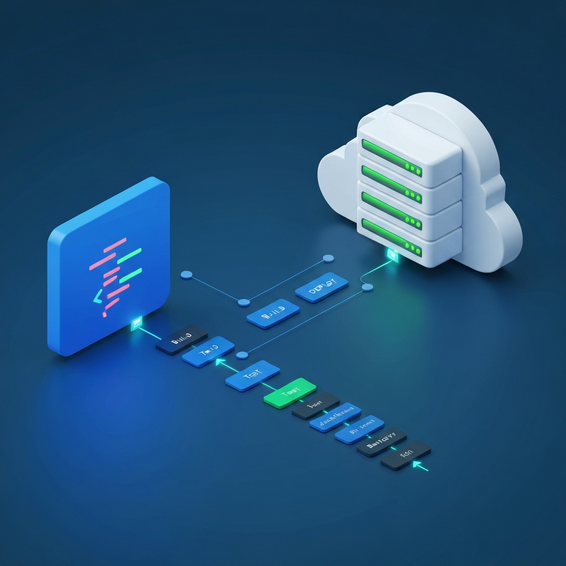
Weaving AI capabilities directly into your DevOps practices is an incredible way to cut down on deployment failures. For instance, you can configure GitHub Actions or GitLab CI to trigger an automated AI review whenever a pull request is submitted. The AI agent acts quickly to scan for known security vulnerabilities, strictly enforce your team’s coding standards, and summarize complex changes for the human reviewer. If you’re in the process of setting up a robust deployment pipeline, think of AI as an excellent, tireless first line of defense.
3. Dynamic Database Query Generation
Managing ERP systems or large-scale databases often means getting bombarded with endless data extraction requests from non-technical team members. To save your sanity, you can easily build an internal Slack bot powered by the OpenAI API to intercept these requests. Employees simply ask for the data they need using plain English, and the AI steps in to translate that context into secure, read-only SQL queries. It delivers the requested results instantly, all without a developer ever needing to get involved.
Best Practices for AI Automation Optimization
While there’s no denying that AI offers some incredible capabilities, rolling it out without the right technical safeguards can backfire quickly. Without proper oversight, you could end up facing data leaks, runaway API costs, and serious system instability. Sticking to a few core industry best practices will ensure your new automated workflows remain secure, fully compliant, and highly performant over time.
- Start Small and Monitor Closely: It is never a good idea to completely automate a critical, client-facing process on day one. Instead, run your AI workflow in a “shadow mode” where it suggests actions but still requires a human to sign off. As the AI consistently proves its reliability, you can gradually step back and remove the human element.
- Secure Your API Keys: Hardcoding private API keys directly into your Python scripts is a massive security risk that you want to avoid at all costs. Always rely on encrypted environment variables or use a dedicated secrets manager, such as HashiCorp Vault or AWS Secrets Manager, to keep your credentials locked down tight.
- Implement Strict Rate Limiting: Sending a massive volume of AI API calls can eat through your budget faster than you might think. Make sure to establish strict rate limits and set up automated billing alerts on your OpenAI or Anthropic accounts. This simple step prevents infinite runaway loops from causing accidental budget overruns.
- Sanitize All Inputs and Outputs: Whenever you allow an AI model to run database queries or touch your core ERP system, strict input sanitization is an absolute must. You have to heavily restrict and clearly define the AI’s operational boundaries to protect your infrastructure against malicious prompt injection attacks.
Recommended Tools and Resources
Building and deploying these automated systems requires having the right technology stack in your corner. If you want to successfully integrate business process automation AI into your daily routine, here are the top tools we highly recommend checking out.
- Zapier: Widely considered the industry standard, Zapier makes connecting over 5,000 different web applications a total breeze. Its built-in AI formatting features are fantastic for seamlessly passing unstructured data between complex, isolated systems.
- Make (formerly Integromat): This is a highly visual, incredibly powerful automation platform. For advanced power users, Make allows you to build out complex, multi-step routing logic that easily surpasses what Zapier can typically handle.
- n8n: If you are looking for a self-hostable, fair-code workflow automation tool, this is it. It is an absolutely perfect fit for HomeLab enthusiasts, privacy advocates, and DevOps engineers who demand total data sovereignty over their workflows.
- GitHub Copilot: An absolute game-changer for modern developers. It takes the pain out of writing boilerplate code, Bash automation scripts, and complex configuration files, helping you work significantly faster.
Frequently Asked Questions (FAQ)
What is the easiest way to start automating tasks with AI?
The quickest, most painless way to get started is by leaning on reliable no-code platforms like Zapier or Make. These tools let you easily hook your daily email, calendar, and team chat apps up to an AI model like ChatGPT. From there, you can automatically draft replies, summarize long meetings, and organize incoming data without ever having to write a single line of traditional code.
Is AI automation safe for handling sensitive business data?
That honestly depends entirely on how you implement it technically. If you’re just using public AI models on their default settings, you have to be very careful not to feed them sensitive customer PII or proprietary source code—otherwise, your data might end up being used to train public models. For strict enterprise-level security, it’s best to stick to enterprise-tier APIs that offer zero-retention policies, or simply host open-source LLMs locally on your own heavily secured hardware.
Can AI completely replace traditional script automation?
In short, no. Traditional, deterministic script automation (think Bash, PowerShell, or simple Cron jobs) still reigns supreme when it comes to highly predictable, structured tasks that demand blazing-fast speed and absolute precision. AI, on the other hand, is best utilized for tasks that specifically require natural language processing, contextual decision-making, and the ability to sort through messy, unstructured data.
Do I need to know how to code to use AI automation?
Not at all! Advanced coding skills aren’t necessary if you’re just looking to handle basic or intermediate tasks. Visual tools like Zapier provide intuitive drag-and-drop interfaces that anyone can figure out. With that said, having a solid grasp on basic scripting languages like Python or JavaScript definitely gives you the upper hand, allowing you to build customized, highly resilient workflows tailored specifically to your unique infrastructure.
Conclusion
At the end of the day, figuring out how to automate daily tasks using ai is easily one of the smartest, most valuable investments you can make for your professional tech career. When you start strategically handing off repetitive admin work, tedious server log analysis, and mind-numbing manual data entry to intelligent machine learning models, you instantly free up your cognitive bandwidth to tackle high-impact projects.
My advice is to start small. Try implementing something simple like smart email triage or automated meeting summaries using beginner-friendly tools. Once you feel a bit more comfortable, you can graduate to building robust, custom Python AI scripts that handle complex database queries or fortify your CI/CD pipelines. By embracing the inevitable shift toward deep AI automation today, you’ll ensure that you stay well ahead of the curve in the rapidly evolving worlds of IT, DevOps, and software development.
About the Author