How to Create AI Chatbot for Website: A Complete Technical Guide
Customer expectations have drastically shifted over the last few years. Today, when visitors land on your site, they don’t just hope for quick answers—they expect instant, 24/7 support. However, staffing an around-the-clock human team is incredibly expensive and notoriously hard to scale. Because of this, mastering how to create ai chatbot for website interfaces has quickly become one of the most sought-after skills for modern web developers.
Moving beyond basic, clunky Q&A bots to sophisticated natural language processing assistants can completely transform how users engage with your brand. It doesn’t matter if you manage a personal blog, a bustling e-commerce store, or a complex SaaS platform; conversational AI is now the gold standard for digital interaction.
In this comprehensive guide, we’ll walk you through the entire setup process. We will dive into the glaring issues with older bots, explore some rapid no-code alternatives, and finally break down advanced developer strategies for deploying a custom ChatGPT for website integration.
Understanding the Basics: How to Create AI Chatbot for Website Use Cases
Before we start writing any code, we need to talk about why traditional chatbots often fall short—and why generative AI is the ultimate fix.
The core issue with legacy support bots is their reliance on strict, rule-based logic. They depend entirely on exact keyword matches and rigid conversation trees. The moment a user asks a question that slightly deviates from the script, the bot breaks down, leaving the visitor stuck in an infuriating loop of unhelpful menus. Ultimately, this frustrating user experience drives up bounce rates and costs you revenue.
This is where an NLP (Natural Language Processing) chatbot changes the game, especially one fueled by Large Language Models (LLMs) like OpenAI’s GPT-4. Rather than simply hunting for keywords, these models actually comprehend context, intent, and subtle conversational nuances. By upgrading your customer support automation with an AI backend, you guarantee that visitors receive dynamic, intelligent answers customized to their specific needs.
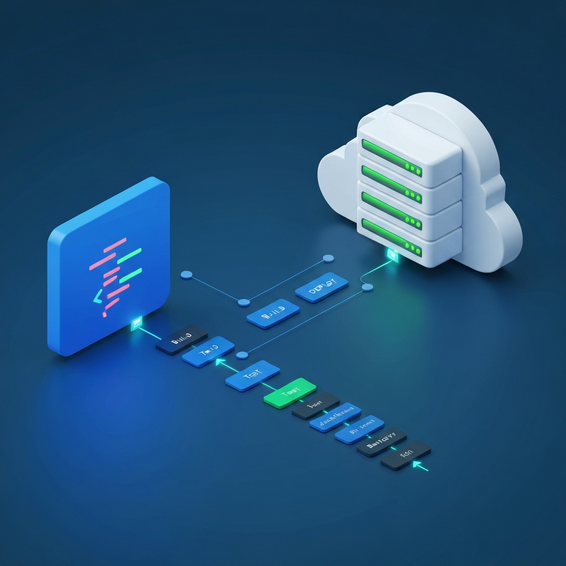
If you’ve spent any time working with Cloud Development, you probably remember when managing the infrastructure for these kinds of tools was a massive headache. Thankfully, today’s modern APIs have streamlined the process entirely.
Quick Fixes / Basic Solutions
For those who want to figure out how to build these tools without writing hundreds of lines of code, you’re in luck. There are plenty of “plug-and-play” options out there, making them perfect for marketing teams or small business owners who need something deployed quickly.
If you’re looking for a straightforward, step-by-step approach on how to create ai chatbot for website integrations quickly, follow this path:
- Select an AI Platform: Pick a reliable provider like Chatbase, Botpress, or Dialogflow.
- Gather Your Data: Pull together your website URLs, FAQ pages, and internal support docs to train the model.
- Configure the System Prompt: Give your chatbot a distinct personality, define its boundaries, and set its overall response tone.
- Generate the Embed Code: Grab the JavaScript snippet provided by the platform’s dashboard.
- Paste the Snippet: Drop that code directly into your website’s header or body tag.
If you’re running WordPress, the setup is even more straightforward. A quick search for “AI Chatbot” in the plugin repository will yield dozens of tools that hook right into your admin dashboard. Typically, you just install the plugin, drop in your OpenAI API key, and tweak the colors to match your branding. Just keep in mind that this route sacrifices some of the deeper customization you’d get by coding it from scratch.
Advanced Solutions (Custom API Integration)
For developers and IT teams, slapping a third-party widget onto a site rarely cuts it. You usually need a fully custom ChatGPT for website integration to maintain strict control over your user interface, ensure robust data privacy, and connect seamlessly to your existing backend. Building it yourself not only helps you avoid vendor lock-in but also ensures the architecture scales effortlessly alongside your main web application.
Crafting a bespoke OpenAI API chatbot typically relies on a powerful technique known as Retrieval-Augmented Generation (RAG). While modern AI models are incredibly intelligent out of the box, they don’t magically know the proprietary details of your business. RAG bridges this gap by allowing the LLM to search your internal database before it drafts a reply. This guarantees that the bot’s responses are highly specific, factually accurate, and perfectly aligned with your business logic.
- Set Up the Backend Framework: Spin up a secure server environment using a solid framework like Node.js (pairing well with Express or NestJS) or Python (using FastAPI or Flask). It’s critical that you never expose your API keys in frontend code, as doing so invites security breaches and quota theft.
- Prepare the Vector Database: Take all your website content, product manuals, and documentation, and convert them into embeddings—essentially mathematical representations of your text. You’ll use OpenAI’s embedding models (such as text-embedding-3-small) for this, securely storing the results in a specialized vector database like Pinecone, Milvus, or Weaviate.
- Create the Semantic Query Logic: Whenever a visitor asks a question, your server needs to instantly convert their natural language into an embedding. It then runs a similarity search against your vector database to pull the most relevant chunks of context. Finally, it bundles that retrieved context with the user’s original question and fires it off to the OpenAI API.
- Stream the Response to the UI: Forcing users to wait for a full API response can introduce frustrating latency. Instead, use WebSockets or Server-Sent Events (SSE) to stream the AI’s response chunks back to the frontend in real time. This creates that fluid, typewriter-like effect users have come to expect from top-tier conversational AI.
Embracing this developer-first approach grants you total flexibility. You can seamlessly weave the bot into your internal CRM (like HubSpot or Salesforce), set up automated follow-up emails based on user sentiment, or host the microservice alongside your current Self Hosted Tools for absolute control over your architecture.
Best Practices for AI Chatbots
Getting your chatbot into production is merely the first step. To sustain high-quality customer support automation and safeguard your brand’s reputation, you need to adhere to some strict performance, security, and optimization best practices.
- Strict System Prompts: Leverage advanced prompt engineering to keep the bot strictly focused on its intended domain. For instance, instruct it: “You are a helpful support assistant for Company X. Only answer questions related to our products. If you do not know the answer, politely say so.” Setting firm boundaries dramatically reduces hallucinations and helps block malicious prompt injection attempts from users trying to break the system.
- Implement Semantic Caching: At a large scale, AI API calls can get pricey. To counter this, utilize caching tools (like Redis) paired with semantic similarity checks to save answers for frequently asked questions. If a new visitor asks a common question, your system instantly delivers the cached response—saving you money on API costs while eliminating latency.
- Seamless Human Handoff Protocol: You should never leave a frustrated user trapped in an endless loop with an AI. Always build a clear, easily accessible pathway to route the conversation to a human agent when the bot gets stuck. You can even program the bot to detect negative sentiment, automatically triggering a human handoff if the user starts getting annoyed.
- Monitor Logs and Analytics: Think of your chatbot as a living, breathing product. Make it a habit to review chat transcripts and telemetry data regularly. Identify exactly where the bot is struggling, pinpoint missing documentation, and continuously refine your system prompts and vector database based on real user interactions.
Recommended Tools / Resources
If you’re ready to build and launch your AI chatbot integration, we highly recommend adding these specialized tools to your tech stack:
- OpenAI API: The undisputed gold standard for powering an NLP chatbot. Specifically, their gpt-4o-mini model offers a fantastic balance of high performance and low cost for customer support tasks.
- Vercel AI SDK: A brilliant open-source library that takes the headache out of streaming AI responses in Svelte, React, and Next.js applications.
- Pinecone: A lightning-fast, fully managed vector database that makes setting up RAG applications an absolute breeze.
- Flowise: For developers who favor visual programming, Flowise offers a highly intuitive drag-and-drop interface for constructing custom LLM flows.
Finally, when looking for rock-solid infrastructure to host your new AI application, it’s worth exploring high-performance cloud providers tailored for Self Hosted Apps. Having the right environment ensures your bot stays online and responsive during traffic spikes.
FAQ Section
How much does it cost to run an AI chatbot?
The overall cost really depends on the route you choose. Basic no-code platforms usually run anywhere from $20 to $100 per month. On the flip side, building a custom OpenAI API chatbot means you’re paying purely for token usage. For the majority of small to medium-sized websites, this usage-based pricing rarely exceeds a few dollars a month, making it a highly cost-effective choice.
Can I train the AI chatbot on my own website data?
Absolutely. By leveraging RAG (Retrieval-Augmented Generation) or fine-tuning models, you can restrict the chatbot so it exclusively pulls from your uploaded documents or scraped website data. This guarantees that your bot delivers highly accurate answers that are distinctly tailored to your company.
What is an NLP chatbot and how does it differ from a standard bot?
A traditional bot relies on rigid rules and exact keyword triggers—if a user doesn’t guess the exact phrase it’s programmed to recognize, the conversation breaks. Conversely, an NLP (Natural Language Processing) chatbot utilizes machine learning to grasp the actual context and intent behind a user’s phrasing, resulting in a much more fluid, natural, and helpful conversation.
Is my data secure when using the OpenAI API?
When utilizing the OpenAI API for developer or enterprise purposes, OpenAI explicitly guarantees that they do not use your API data to train their future models. Even with this protection, it remains a critical best practice to avoid passing sensitive personally identifiable information (PII) to the API unless absolutely necessary. Always ensure your setup complies with local data privacy laws and GDPR requirements.
Conclusion
Phasing out frustrating, legacy support systems in favor of intelligent automation isn’t just a nice-to-have upgrade anymore—it’s a strict necessity. By absorbing the strategies outlined in this guide on how to create ai chatbot for website environments, you are making a massive leap toward drastically lowering support costs, modernizing your digital footprint, and elevating your user experience.
Whether you opt for a rapid plug-and-play widget or commit to engineering a fully custom RAG-powered assistant, the modern toolkit makes AI chatbot integration easier to grasp than ever before. Start with a small prototype, listen closely to user feedback, constantly refine your system prompts, and watch as your new automated assistant completely revolutionizes the way you interact with your customers.
About the Author